Key takeaways
- A hard set is a working set that ends with about 4 reps or fewer in reserve. Warm-ups do not count.
- For most people, roughly 10–20 hard sets per muscle per week is a good target. Beginners need less.
- Spread weekly sets over at least two sessions so every set is high quality.
- If performance drops for weeks and joints ache, cut sets before adding more.
What training volume means
Training volume is simply how much work you do. You can measure it in several ways, for example as total weight lifted (sets × reps × load). For muscle growth, though, the most practical measure is simpler: hard sets per muscle per week.
Total tonnage is misleading because it depends on the exercise. A leg press racks up thousands of kilos, a lateral raise a tiny fraction of that, yet both can be equally demanding for the target muscle. A set count works the same way across every exercise.
What counts as a hard set?
A hard set is a working set taken reasonably close to failure. The practical cut-off: you finish with about 4 reps or fewer in reserve. That is enough to give the muscle a clear growth signal.
- Counts: working sets ending 0–4 reps short of failure.
- Does not count: warm-up sets, technique practice, and sets so light you could have done another 6–8 reps.
Judging reps in reserve takes some practice. The RIR and RPE Explained: How Hard Should a Set Be? guide shows you how.
What the research says
In a 2017 meta-analysis by Schoenfeld and colleagues, muscle growth increased as weekly sets increased. Groups doing 10 or more sets per muscle per week grew noticeably more than those doing fewer than 5. A later systematic review (Baz-Valle et al. 2022) concluded that about 12–20 weekly sets per muscle is a sensible range for trained people, with no clear extra benefit shown above that.
Research cannot give one exact number for everyone. Individual responses vary, and studies define a set slightly differently. The rule of thumb is still clear: roughly 10–20 hard sets per muscle per week covers most people's needs.
Beginners and advanced lifters need different amounts
For a beginner, even a small amount of work is a new stimulus, and learning technique matters more than collecting sets. Advanced lifters progress more slowly and usually both tolerate and need more work.
| Experience | Hard sets / muscle / week |
|---|---|
| Beginner (under 6 months) | 6–10 |
| Novice (6–12 months) | 8–12 |
| Intermediate (1–3 years) | 10–16 |
| Advanced (3+ years) | 12–20 |
These ranges are for hypertrophy-focused training. Start at the low end and only add sets when progress slows and you are recovering well. Not every muscle has to sit at the same level: you can prioritise a lagging muscle and keep others at maintenance.
How to split sets across the week
When weekly volume is equal, training frequency has made a fairly small difference in research. Even so, training each muscle at least twice a week is usually more practical (Schoenfeld et al. 2016). The reason is simple: 16 sets in one session means your last sets are done tired and with poor quality.
- Keep per-session sets for one muscle reasonable, in practice often around 6–10 hard sets.
- 3 sessions a week: full body each time, 3–5 sets per muscle per session.
- 4 sessions a week: an upper/lower split, each muscle trained twice.
For a fuller comparison, see full body vs split.
How to count your sets
Compound lifts work several muscles. A sensible method is to count a set as 1 for the primary muscle and 0.5 for each assisting muscle. Examples:
- Bench Press: chest 1, triceps 0.5, front delts 0.5.
- Pull-up: back 1, biceps 0.5.
- Romanian Deadlift: hamstrings 1, glutes 0.5.
- Leg Press: quads 1, glutes 0.5.
If you do 6 sets of bench press and 6 sets of triceps work in a week, your triceps get 6 + 3 = 9 sets. Without counting the halves you would underestimate arm volume and easily add sets you do not need.
Signs you are doing too much
More is not always better. If you do more than you can recover from, progress stalls or goes backwards. Typical signs:
- Weights or reps drop for 2–3 weeks in a row, even though sleep and food are fine.
- Muscles are still sore when it is time to train them again.
- Joints and tendons start to complain.
- Motivation fades and sessions run well over the planned time.
When that happens, cut sets by about a third or take a deload week. Then build volume back up from a lower starting point. Results often improve with fewer, better sets.
Track volume without a calculator
Counting sets by hand is tedious, especially with the halves. SimuFit's progress reports count hard sets per muscle for you: a hard set is a completed working set that is not a warm-up and, if you log reps in reserve, ends with 4 or fewer in reserve. The report shows your weekly average next to a recommended band of about 10–20 sets, so you can see at a glance if a muscle is being neglected.
If you would like the numbers set for you, an AI-built program matches volume to your experience and training days, and every program is checked against fixed rules before you see it. You can also start from a ready-made program.
Questions and answers
How many sets per muscle per week should I do?
For most people, about 10–20 hard sets per week is a good target. Beginners do well with 6–10. Add sets only when progress slows and you are recovering well.
Do warm-up sets count?
No. Only working sets taken reasonably close to failure count, in practice about 4 reps or fewer in reserve.
Is more than 20 sets per week useful?
Some advanced lifters may use it for short blocks, but evidence for extra benefit is uncertain and fatigue rises. For most people, quality sets in the 10–20 range are the better choice.
Does bench press count as a triceps set?
Partly. A good rule is to count a compound lift as a full set for the primary muscle and half a set for assisting muscles, so bench press is 1 for chest and 0.5 for triceps.
Exercise library
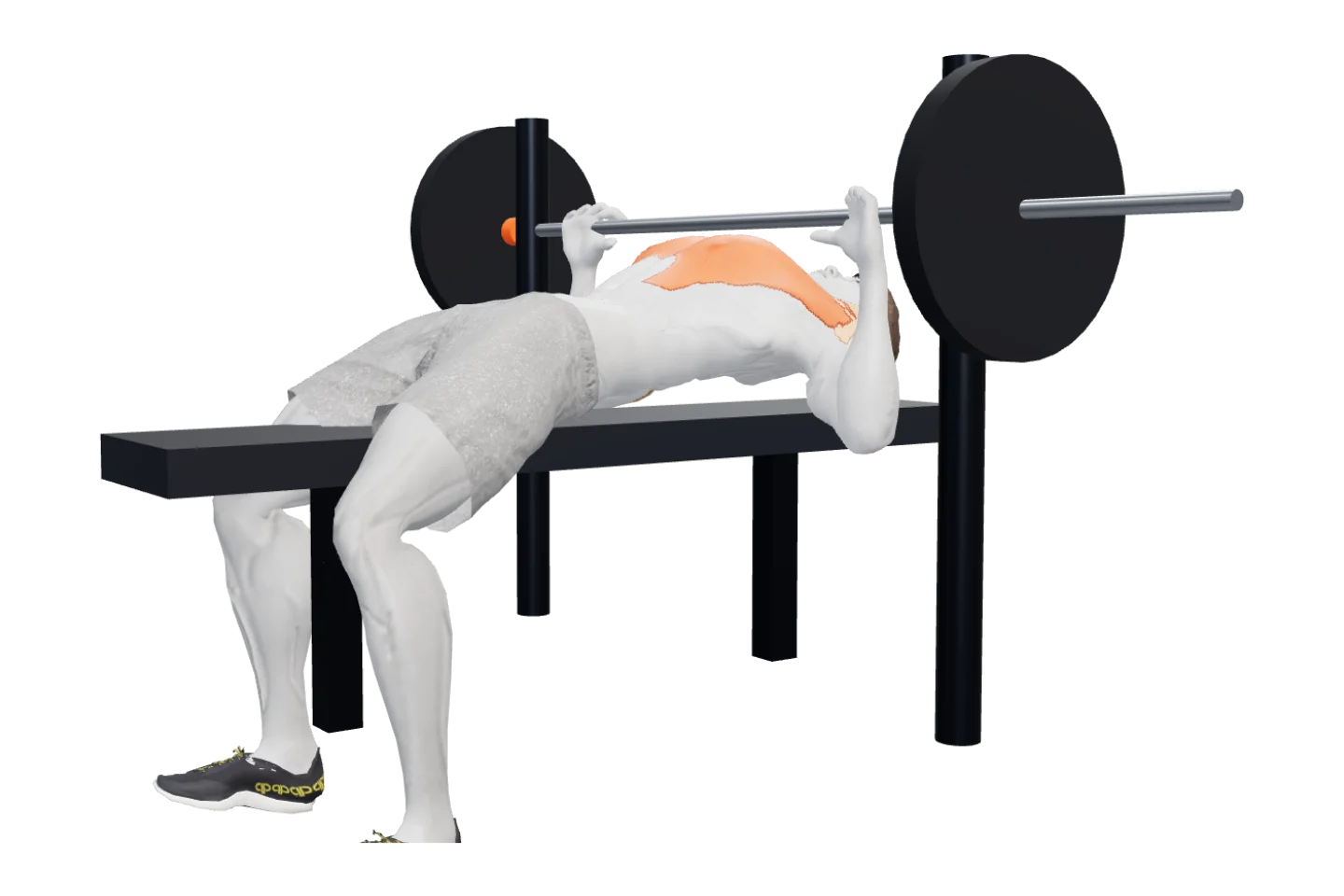
Bench Press
The classic barbell press for chest, shoulders and triceps.
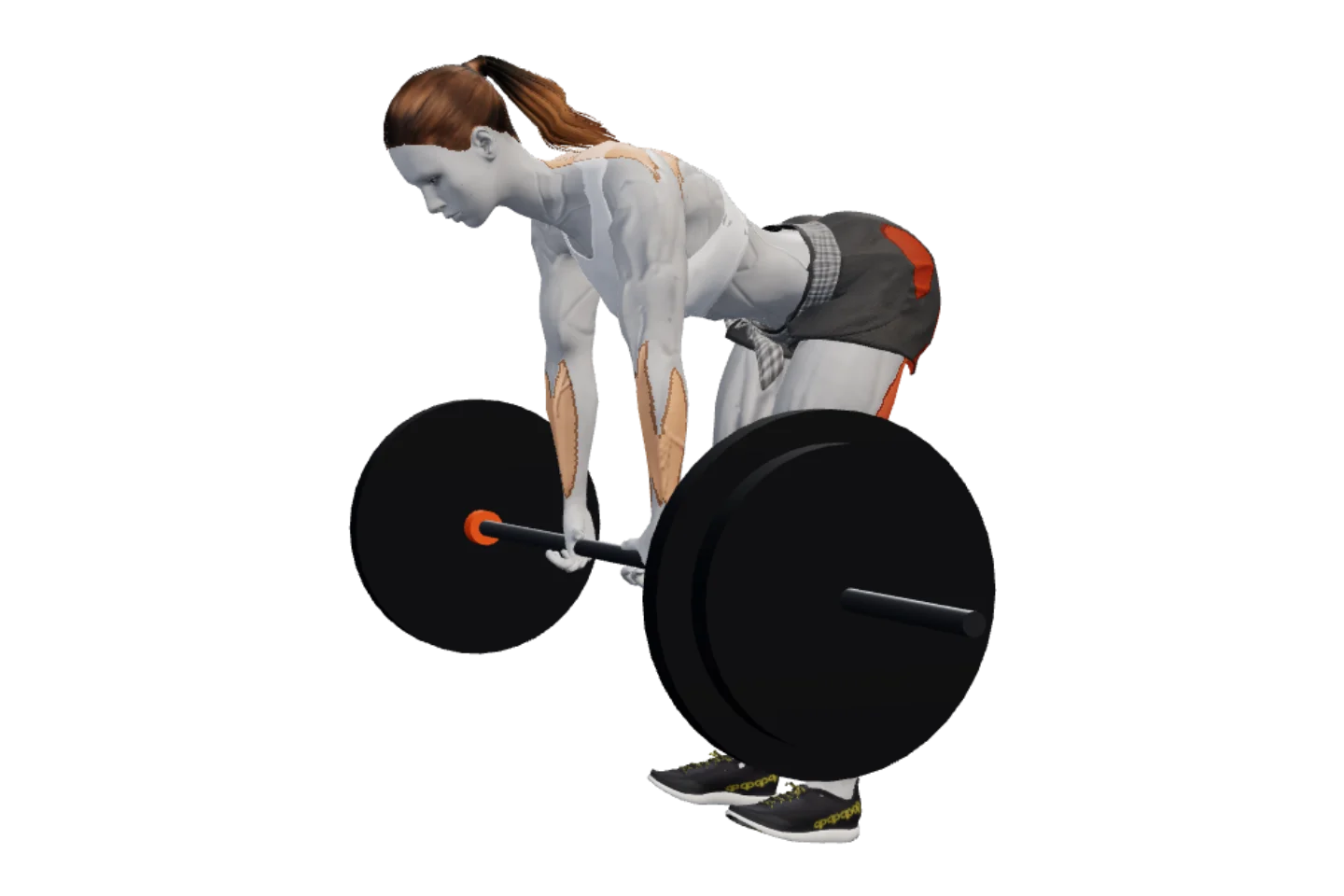
Romanian Deadlift
Barbell hip hinge with soft knees for hamstrings and glutes.
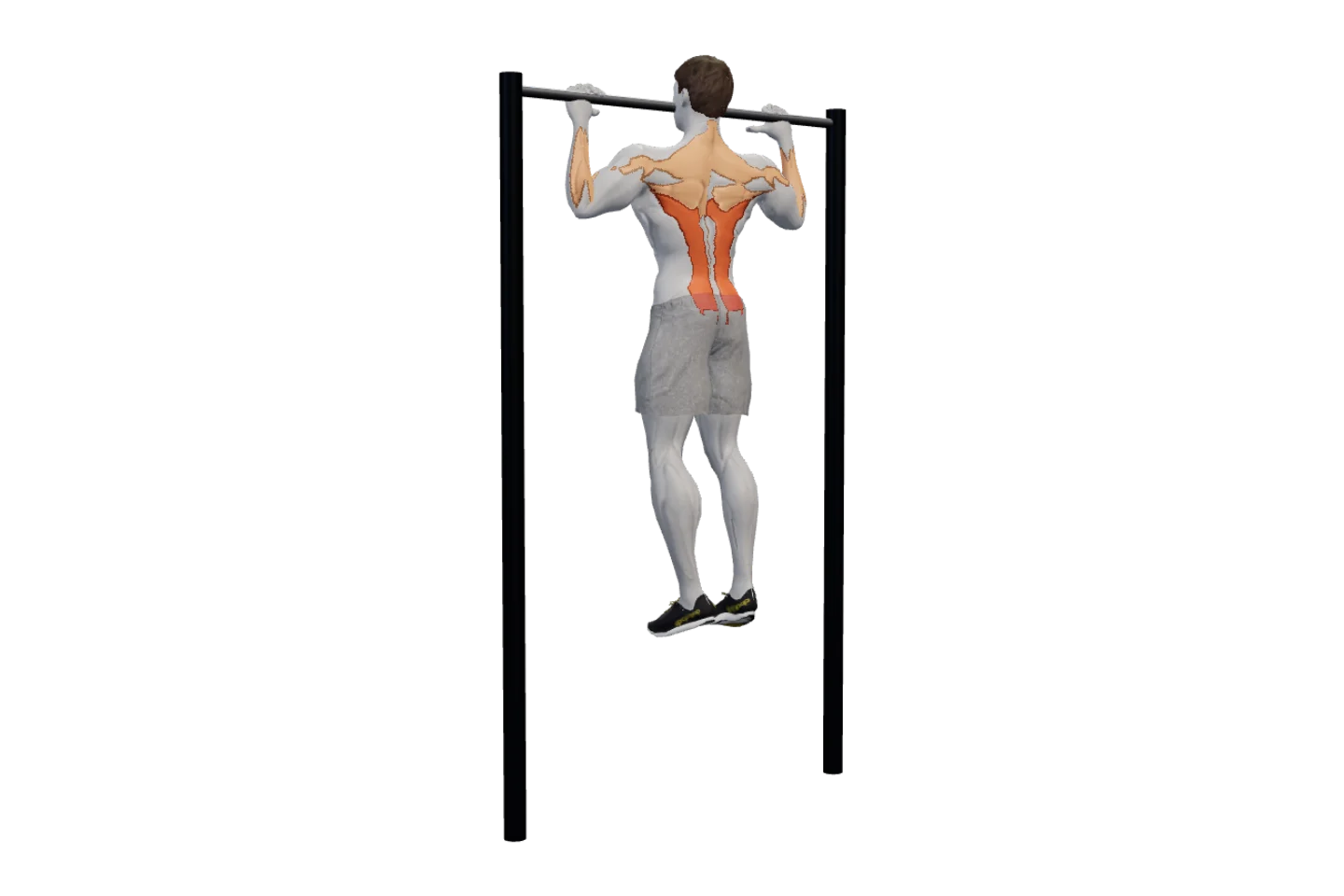
Pull-up
Bodyweight vertical pull; add weight when you pass the rep range.
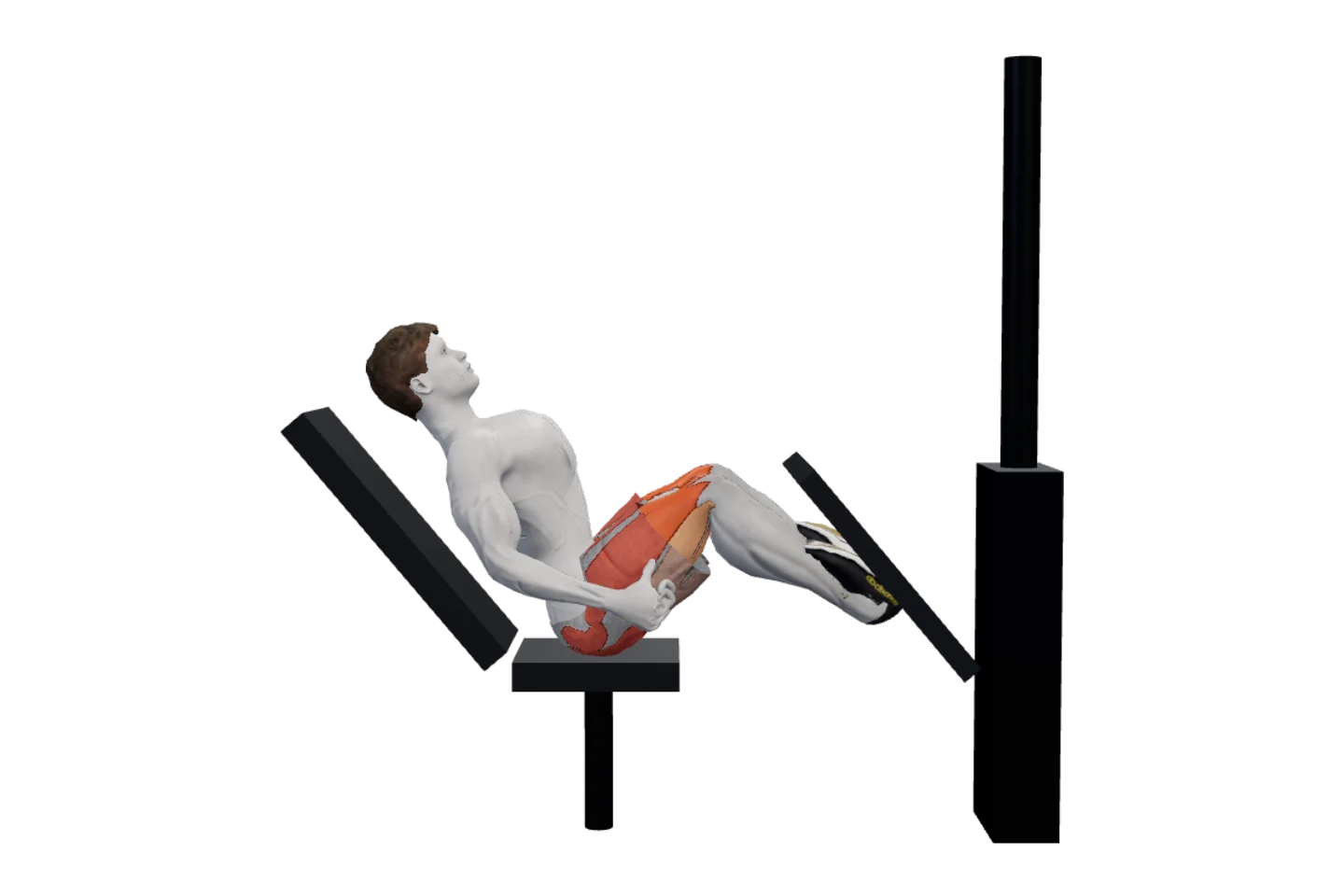
Leg Press
Machine squat pattern; full depth with hips down.
Sources
- Schoenfeld BJ, Ogborn D, Krieger JW (2017) Dose-response relationship between weekly resistance training volume and increases in muscle mass: a systematic review and meta-analysis. J Sports Sci 35(11):1073–1082. doi.org/10.1080/02640414.2016.1210197
- Baz-Valle E, Balsalobre-Fernández C, Alix-Fages C, Santos-Concejero J (2022) A systematic review of the effects of different resistance training volumes on muscle hypertrophy. J Hum Kinet 81:199–210. doi.org/10.2478/hukin-2022-0017
- Schoenfeld BJ, Ogborn D, Krieger JW (2016) Effects of resistance training frequency on measures of muscle hypertrophy: a systematic review and meta-analysis. Sports Med 46(11):1689–1697. doi.org/10.1007/s40279-016-0543-8