Key takeaways
- RIR is reps left in the tank. RPE 8 means the same as RIR 2.
- Most people misjudge by about one rep, usually by stopping further from failure than they think. Practice fixes much of that.
- Keep main lifts at RIR 1–3. Isolation work can go closer to failure (RIR 0–2).
- Across a training cycle, RIR drops week by week, then rises again in the deload.
What do RIR and RPE mean?
RIR (reps in reserve) is how many more reps you could have completed with good form when you racked the weight. If you squat 8 reps and feel you had 2 more, that set was RIR 2.
RPE (rating of perceived exertion) rates effort from 1 to 10. Strength coaches usually use the RIR-based RPE scale described by Zourdos, Helms and colleagues, where each number is tied to reps left. That makes the two scales interchangeable: RPE = 10 − RIR.
The RPE scale next to RIR
| RPE | RIR | What it feels like |
|---|---|---|
| 10 | 0 | Maximal. No more reps possible. |
| 9.5 | 0 | No more reps, but slightly more load might have gone up. |
| 9 | 1 | One rep definitely left. |
| 8.5 | 1–2 | One rep for sure, maybe two. |
| 8 | 2 | Two reps left. |
| 7 | 3 | Three reps left, the bar still moves fast. |
| 5–6 | 4–6 | Light. Warm-ups and deload weeks. |
So “3 × 8 @ RPE 8” means three sets of eight with a load that leaves about two reps in the tank. The program does not fix the weight in advance; you choose it so the effort lands on target.
Why not just train to failure every set?
Muscles grow when sets are hard enough, but failure does not seem to be required. In a 2023 meta-analysis, Refalo and colleagues found similar muscle growth when sets stopped a few reps short of failure compared with sets taken to failure, as long as the number of sets was similar. What does climb steeply over the last few reps is fatigue, and form tends to break down exactly when the load is highest.
RIR gives you a strong enough stimulus and a safety margin at the same time. It also adapts to your day. After a bad night's sleep, RIR 2 simply means a little less weight; on a great day, a little more.
How accurate is RIR?
Honestly, not perfect. A 2022 meta-analysis by Halperin and colleagues found that people miss their reps-to-failure prediction by about one rep on average, usually underestimating how many reps they had left. Estimates get better when:
- you are close to failure (RIR 0–3 is judged better than RIR 5–6)
- the set is short and heavy rather than long and burning
- the exercise is familiar and your technique is stable
For beginners, early RIR numbers are rough guesses. That is fine. What matters is that you rate consistently and get sharper over time.
How to calibrate your RIR
- Pick a safe exercise. Test on a machine or single-joint lift such as the Leg Extension or a machine press. Use free weights only with safety pins or a spotter.
- Predict before you continue. At your planned last rep, say out loud how many more you think you have.
- Keep going to technical failure. Stop when your form clearly changes, then compare the result with your guess.
- Repeat every few weeks. Log the guess and the result. For most people the gap shrinks after a few tries.
Which RIR for main lifts and which for isolation?
Main lifts: RIR 1–3
On heavy compound lifts such as the Back Squat, Bench Press and deadlift, failure loads the whole body, raises injury risk and eats into recovery for your next sessions. Keep them mostly at RIR 1–3. In SimuFit, main lifts are never taken to failure.
Isolation exercises: RIR 0–2
On single-joint moves like the Dumbbell Lateral Raise or curls, a missed rep is harmless and the fatigue stays local. You can push closer to failure there, for example RIR 0–1 in the last weeks of a cycle or on the final set of an exercise.
Using RIR across a training cycle
RIR works best when it changes on purpose. A typical cycle starts further from failure and moves closer each week until a deload brings effort back down. The 18-week full-body program runs its six-week phases like this:
| Week | Main lifts | Accessories |
|---|---|---|
| 1 | RIR 3 | RIR 2 |
| 2 | RIR 2–3 | RIR 1–2 |
| 3 | RIR 2 | RIR 1 |
| 4 | RIR 1–2 | RIR 0–1 |
| 5 | RIR 1 | RIR 0 (last set) |
| 6 (deload) | RIR 4 | RIR 3–4 |
The early weeks let you settle into new loads. The late weeks give the hardest stimulus right before fatigue is cleared in a deload week. If you cannot hit the RIR target with clean reps, drop the weight by 2.5–5 % rather than grinding.
Common RIR mistakes
- Rating the burn, not the reps. On a long set, muscles burn well before you run out of reps. Ask yourself how many more reps you could do with good form.
- Always staying too far away. If every set ends at RIR 4–5, the stimulus is weak. Caution is good at first, but later in a cycle your sets should genuinely feel hard.
- Rating long after the set. Judge RIR right after the last rep while the feeling is fresh, and log it before your rest starts.
RIR and progression
RIR also tells you when to add weight. If a set at 82.5 kg ends well above your target, say RIR 4 when you aimed for 2, the load is too light: go up next time. If you hit RIR 0 before the last rep, repeat the weight. More on that in progressive overload.
The SimuFit workout logger lets you add RIR to any set with a single tap. It shows last time's numbers and suggests an increase once you hit the top of your rep range on every set, or when your top set was RIR 3 or more.
Questions and answers
Is RPE 8 the same as RIR 2?
Yes. On the RIR-based RPE scale, RPE = 10 − RIR, so RPE 8 means you finished the set with about two reps left.
Should beginners use RIR?
Yes, loosely. Beginners can keep main lifts around RIR 2–3 and focus on technique. Estimates get noticeably better within a few weeks of practice.
Do I need to log RIR on every set?
No. Logging it on the last or heaviest set is enough. That set tells you the most about whether the weight was right.
What is technical failure?
The point where you can no longer do another rep with the same form. It usually comes a rep or two before absolute failure and is a sensible limit for most exercises.
Exercise library
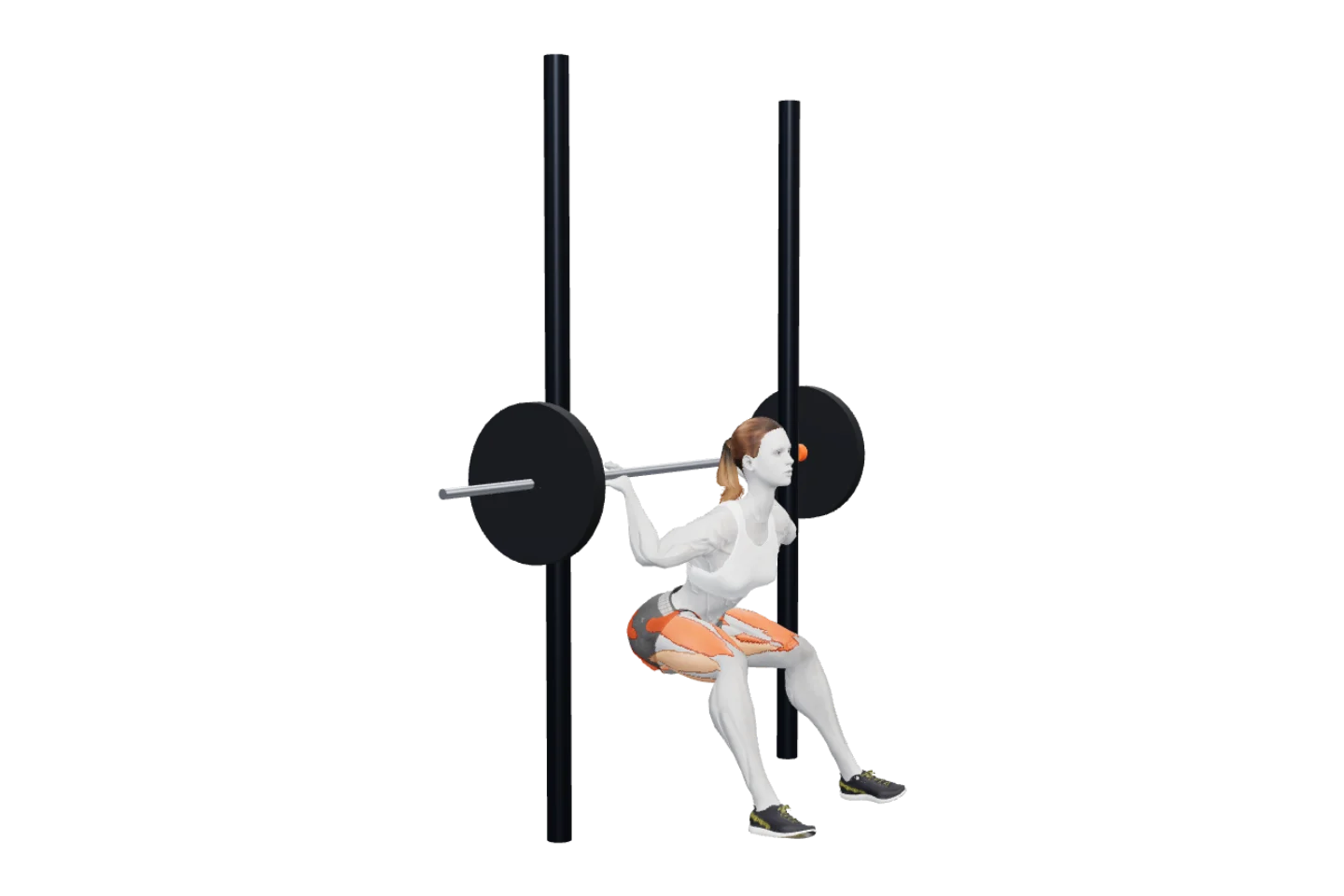
Back Squat
Barbell on the upper back, squat to at least parallel.
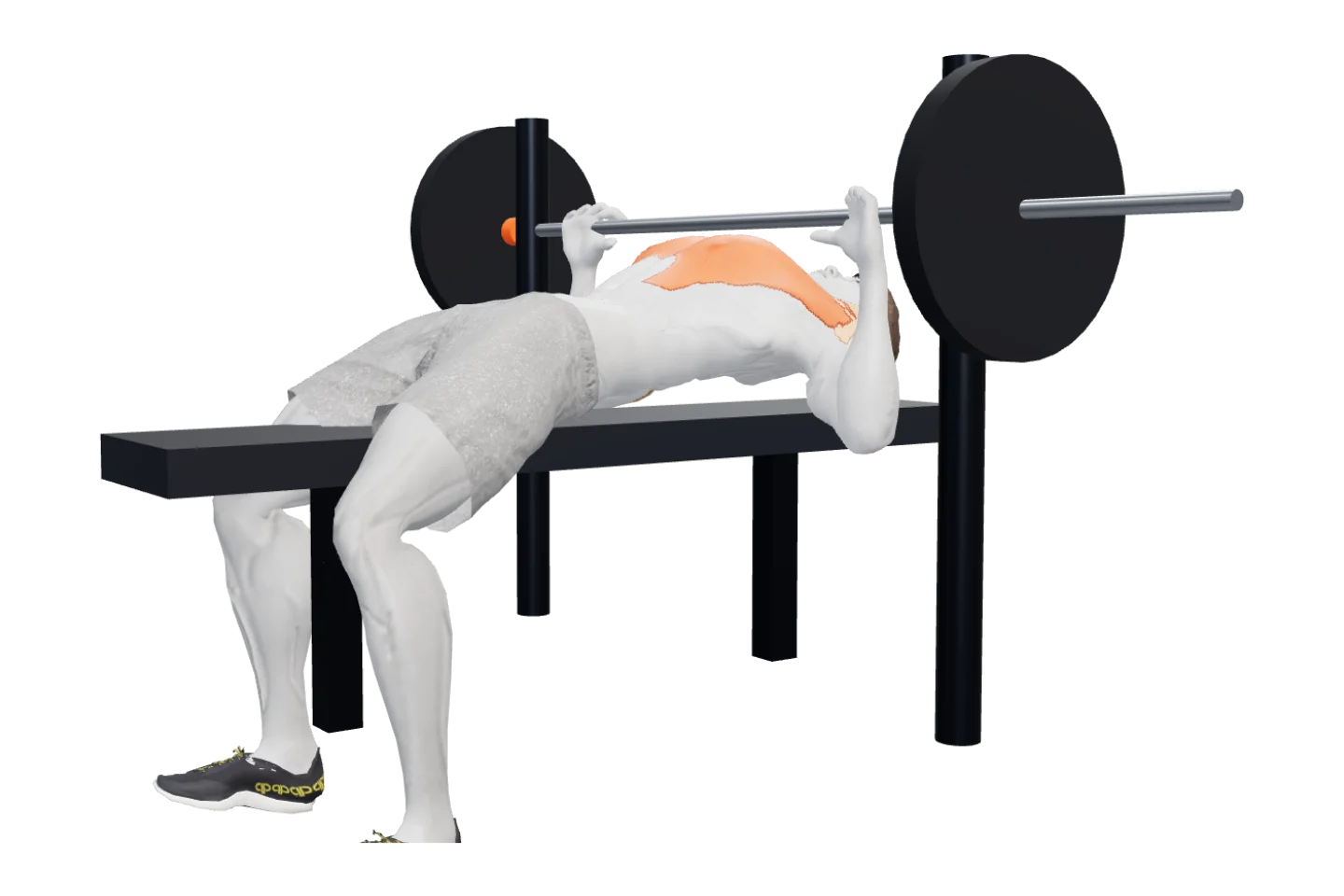
Bench Press
The classic barbell press for chest, shoulders and triceps.
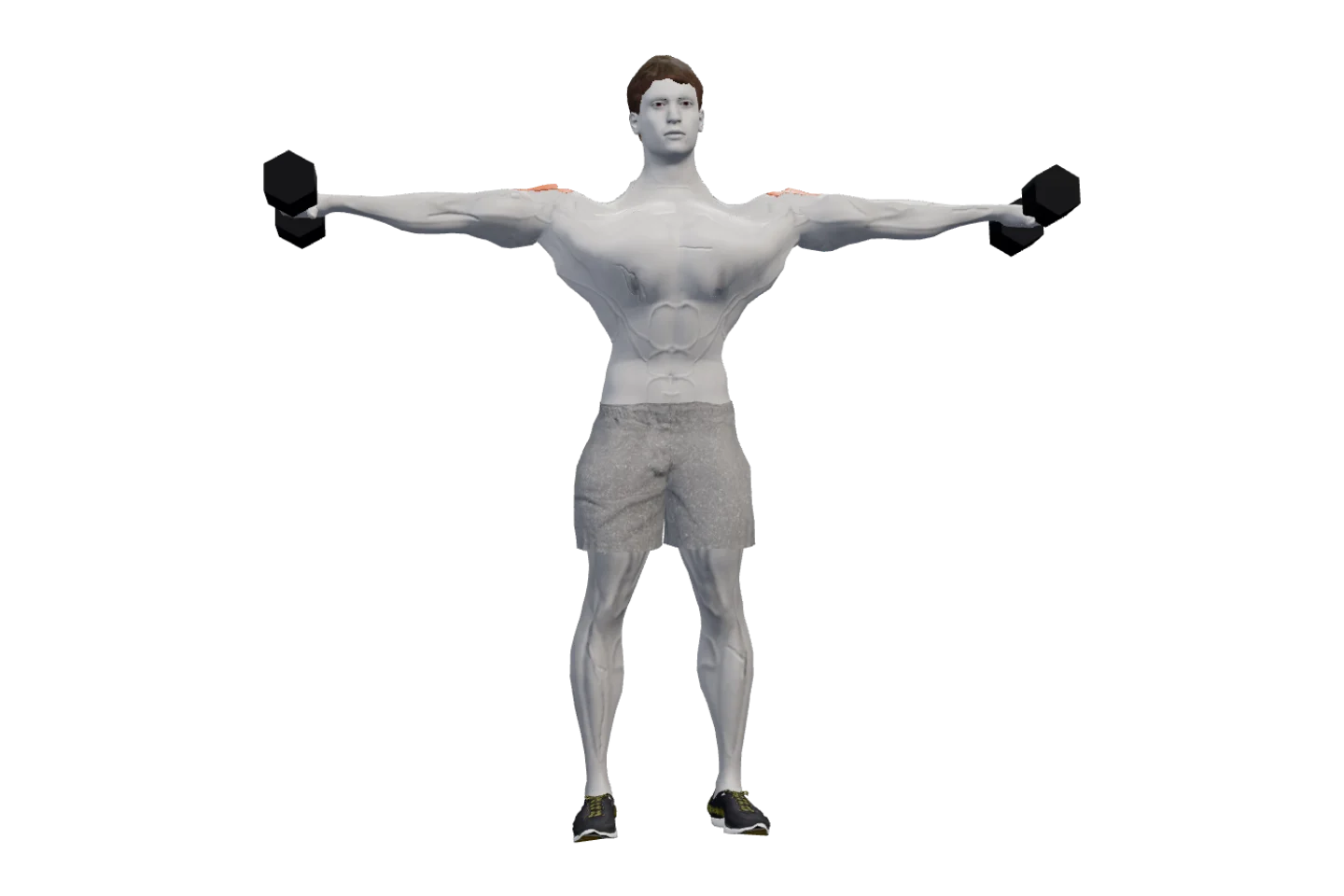
Dumbbell Lateral Raise
Raise the dumbbells out to the sides for wider shoulders.
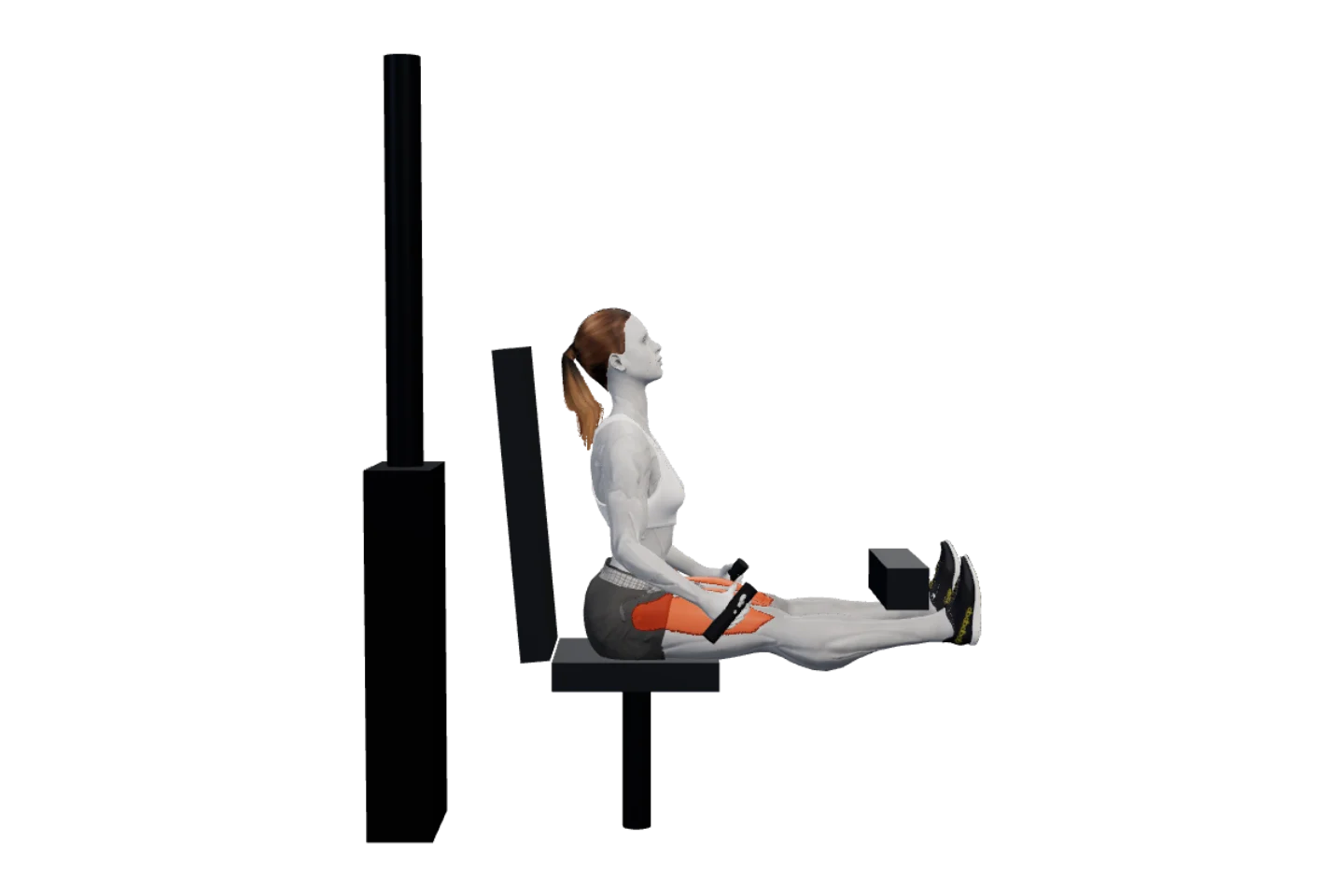
Leg Extension
Seated knee extension machine.
Sources
- Helms ER, Cronin J, Storey A, Zourdos MC (2016) Application of the Repetitions in Reserve-Based Rating of Perceived Exertion Scale for Resistance Training. Strength Cond J 38(4):42–49. doi.org/10.1519/SSC.0000000000000218
- Zourdos MC et al. (2016) Novel Resistance Training–Specific Rating of Perceived Exertion Scale Measuring Repetitions in Reserve. J Strength Cond Res 30(1):267–275. doi.org/10.1519/JSC.0000000000001049
- Halperin I et al. (2022) Accuracy in Predicting Repetitions to Task Failure in Resistance Exercise: A Scoping Review and Exploratory Meta-analysis. Sports Med 52:377–390. doi.org/10.1007/s40279-021-01559-x
- Refalo MC, Helms ER, Trexler ET, Hamilton DL, Fyfe JJ (2023) Influence of Resistance Training Proximity-to-Failure on Skeletal Muscle Hypertrophy: A Systematic Review with Meta-analysis. Sports Med 53:649–665. doi.org/10.1007/s40279-022-01784-y