Key takeaways
- Train each muscle group at least twice a week.
- With weekly sets equal, frequency makes only a small difference.
- Pick by days: 2–3 days full body, 4 days upper/lower, 5–6 days push/pull/legs.
- The best split is the one you can actually stick to.
The three common ways to split a week
- Full body: every session includes legs, a push and a pull. Usually 2–3 sessions a week.
- Upper/lower: alternate upper-body and lower-body days. Usually 4 sessions a week, so each muscle is trained twice.
- Push/pull/legs (PPL): chest, shoulders and triceps together; back and biceps together; legs on their own day. Run 6 days a week, each muscle is trained twice.
There is also the classic "bro split", where each muscle group gets its own day once a week. It is still popular, but the evidence rarely makes it the best choice.
What the research says about frequency
A meta-analysis by Schoenfeld, Ogborn and Krieger (2016) found that training a muscle at least twice a week produced more growth than training it once. A later analysis (Schoenfeld et al. 2019) found that when weekly sets are equal, frequency has no significant effect on muscle growth. Strength looks similar: in Grgic et al. (2018), higher frequency improved strength gains mainly because it added total volume.
What that means in practice:
- Weekly sets matter more than the split. See training volume.
- Frequency is a tool for spreading volume. Sixteen sets of legs in one session is brutal; split across two sessions, every set is higher quality.
- Twice a week is a sensible minimum for each muscle group. All three splits in this guide meet it.
Comparison: full body, upper/lower and PPL
| Full body | Upper/lower | Push/pull/legs | |
|---|---|---|---|
| Sessions per week | 2–3 | 4 | 6 (or 3 on rotation) |
| Times per muscle per week | 2–3 | 2 | 2 (about 1 on rotation) |
| Exercises per session | 5–6 | 6–7 | 6–7 |
| Flexibility | Best: a missed session doesn't wreck the week | Good | Lowest: one missed day throws off the cycle |
| Best for | Beginners, busy people | Beginners to experienced | Experienced lifters who recover well |
| SimuFit template | Beginner 3×, 18-Week 3× | Upper/Lower 4× | PPL 6× |
How to choose by training days
2–3 days a week: full body
If you train three times a week, full body is almost always the right call. Each muscle gets three sessions, and one missed workout never leaves a muscle group untrained for the week. Beginners can start with Beginner Full Body 3×; more experienced lifters can run the periodised 18-Week Full Body 3×. Short on time? 45-Minute Express 3× uses supersets to fit a full session into 45 minutes.
4 days a week: upper/lower
With four sessions, upper/lower is the natural fit. Each session has room for more sets per muscle, and frequency stays at twice a week. In Upper / Lower 4×, one upper and one lower day are heavier (for example Back Squat and Bench Press for 6–8 reps), and the other two focus on volume.
5–6 days a week: push/pull/legs
If you train almost every day, PPL gives each muscle two sessions a week with enough recovery between them. It needs good recovery and a steady routine. Push / Pull / Legs 6× is built for experienced lifters. You can also run it three days a week on rotation, but then each muscle is trained only about once a week.
5 days a week: a hybrid
There is no single right split for five days. One option is upper/lower on four days plus a lighter full-body or weak-point day, such as shoulders and arms, on the fifth. Another is push/pull/legs followed by an upper and a lower day. Both train every muscle group twice a week.
Example weeks
| Day | Full body 3× | Upper/lower 4× | PPL 6× |
|---|---|---|---|
| Mon | Session A | Upper 1 (heavy) | Push A |
| Tue | Rest | Lower 1 (heavy) | Pull A |
| Wed | Session B | Rest | Legs A |
| Thu | Rest | Upper 2 (volume) | Push B |
| Fri | Session C | Lower 2 (volume) | Pull B |
| Sat | Rest | Rest | Legs B |
| Sun | Rest | Rest | Rest |
How experience changes the answer
- Beginner: full body two or three times a week. You learn lifts faster when you practise them often. See the beginner gym program.
- A year or so in: full body or upper/lower. The choice mostly comes down to how many days you can train.
- Experienced: any split works as long as weekly volume is high enough and the weights keep rising. Progressive overload matters more than the split.
Why splits exist at all
If frequency matters so little, why do experienced lifters use splits? Mostly for practical reasons. As weekly volume rises, it no longer fits sensibly into three sessions. Doing 12–16 weekly sets each for chest, back and legs in a full-body plan means long, draining workouts where the last sets suffer. A split keeps each session focused while total weekly volume goes up.
Recovery is the other reason. Heavy squats and deadlifts tax the lower back and the whole body. Putting them on different days from heavy bench work lets you come to each main lift fresher.
When to change your split
Boredom or a friend's routine are not good reasons to switch. Good reasons are:
- Your available days change for good. A new job, family life or another sport changes your week.
- Sessions run too long. If full-body workouts regularly go past 75 minutes, spread the volume over more days.
- You aren't recovering. If your weights drop week after week and you feel run down, a lighter or less frequent plan may suit you better. Try a deload week first.
When you switch, keep the main lifts the same for the first few weeks. Your log will then show whether the new structure works better, and progress reports show the trend at a glance.
When no standard split fits
Five days a week, a home gym or a cranky shoulder? Build the program around your situation. Browse the ready-made templates on the programs page, or let SimuFit's AI build one from your profile: goal, experience, days per week, session length, equipment and injuries. Every generated program is checked against deterministic safety rules before you see it. You can also build your own from scratch.
Questions and answers
Is full body or a split better for muscle growth?
When weekly sets are equal, studies find only small differences. What matters most is training each muscle at least twice a week and adding load over time.
Should beginners do a split?
Usually not. Full body two or three times a week repeats the main lifts more often, which speeds up learning technique.
Is a once-a-week bro split bad?
It works, but research suggests training each muscle at least twice a week usually produces more growth.
Can I run push/pull/legs three days a week?
Yes, on rotation. Each muscle is then trained only about once a week, so for three days full body is usually the better choice.
Exercise library
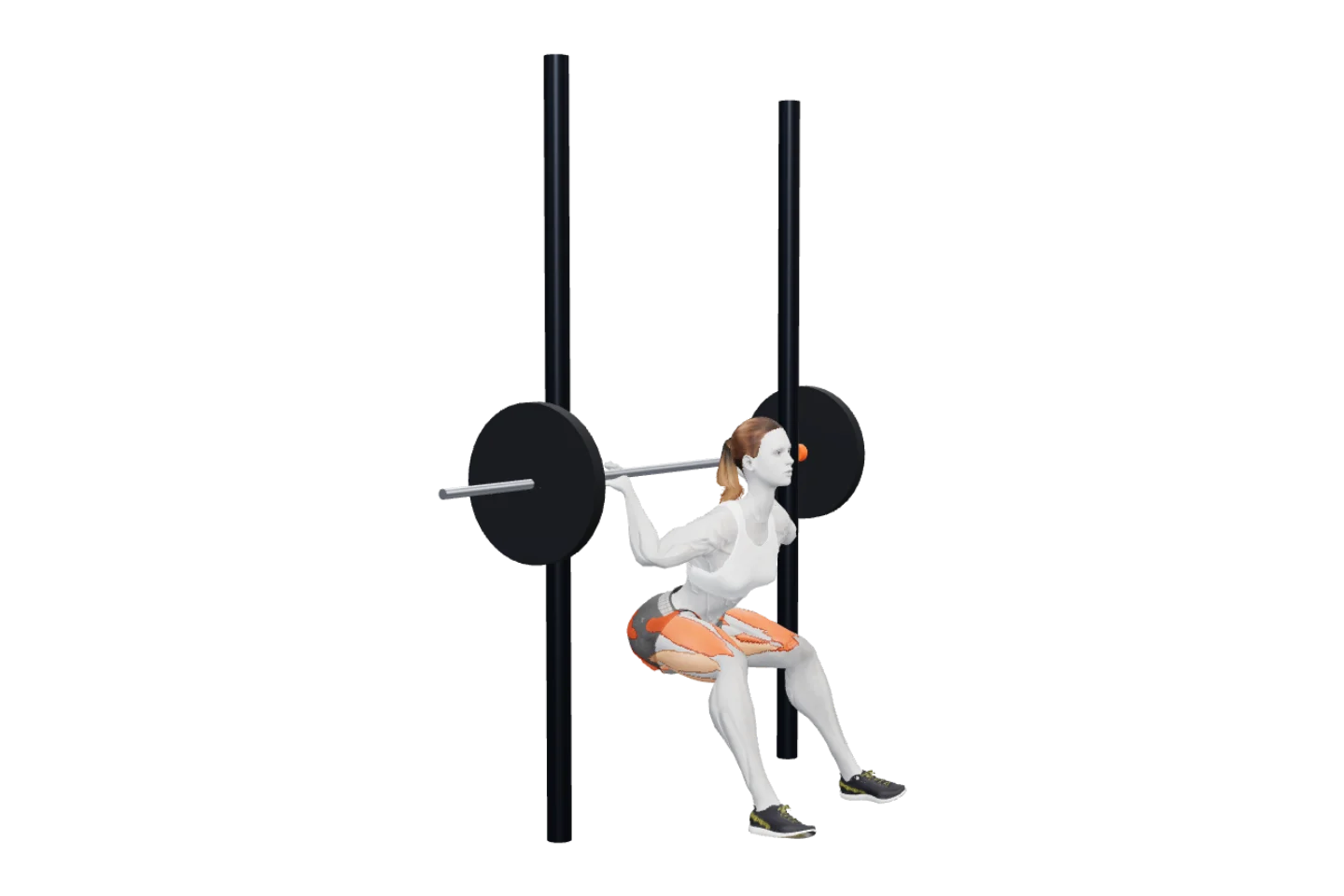
Back Squat
Barbell on the upper back, squat to at least parallel.
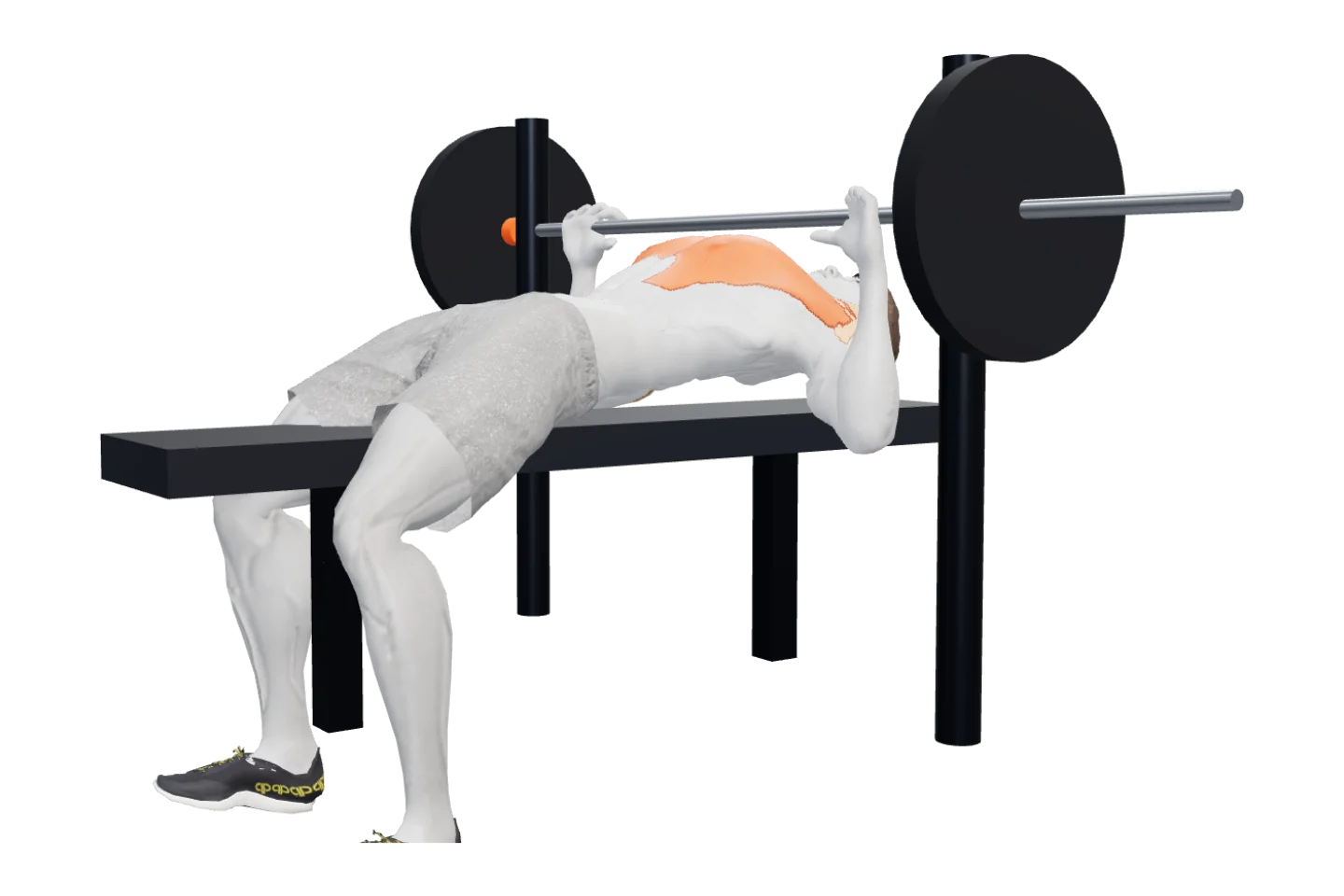
Bench Press
The classic barbell press for chest, shoulders and triceps.
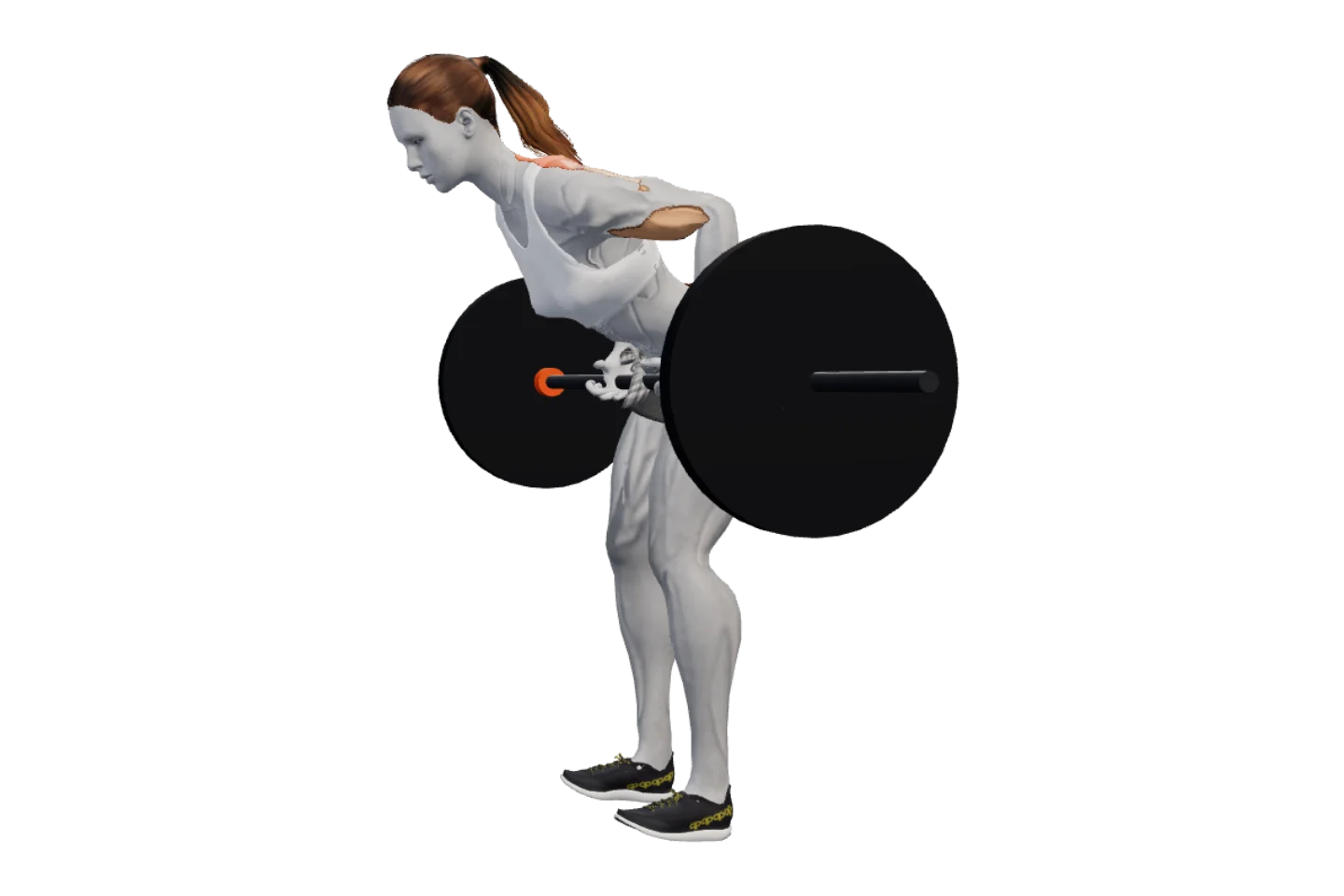
Barbell Row
Hinged-over barbell row for a thick back.
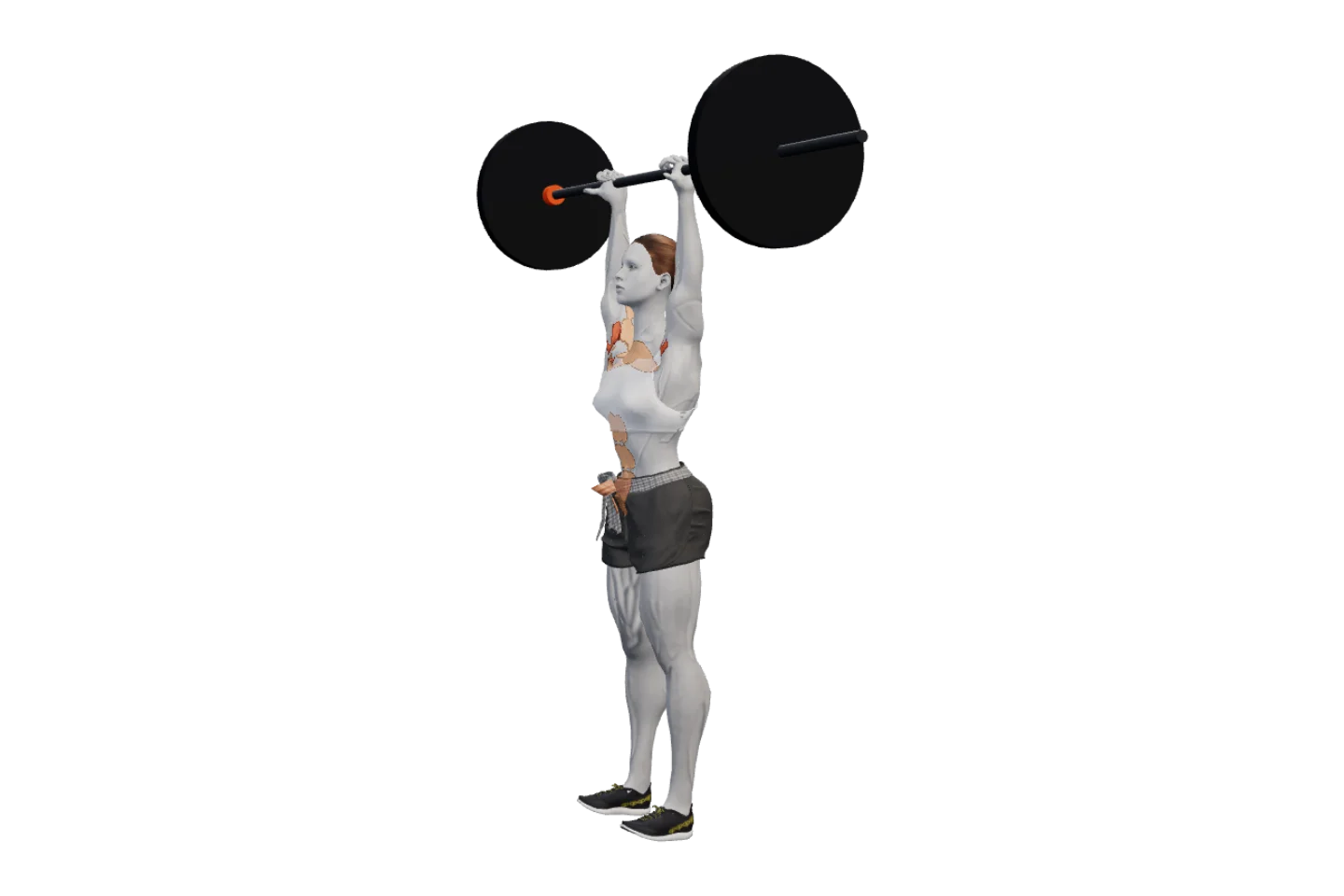
Overhead Press
Standing barbell press overhead.
Sources
- Schoenfeld BJ, Ogborn D, Krieger JW (2016) Effects of resistance training frequency on measures of muscle hypertrophy: a systematic review and meta-analysis. Sports Med 46(11):1689–1697. doi.org/10.1007/s40279-016-0543-8
- Schoenfeld BJ, Grgic J, Krieger J (2019) How many times per week should a muscle be trained to maximize muscle hypertrophy? A systematic review and meta-analysis of studies examining the effects of resistance training frequency. J Sports Sci 37(11):1286–1295. doi.org/10.1080/02640414.2018.1555906
- Grgic J, Schoenfeld BJ, Davies TB, Lazinica B, Krieger JW, Pedisic Z (2018) Effect of resistance training frequency on gains in muscular strength: a systematic review and meta-analysis. Sports Med 48(5):1207–1220. doi.org/10.1007/s40279-018-0872-x
- American College of Sports Medicine (2009) Progression models in resistance training for healthy adults. Med Sci Sports Exerc 41(3):687–708. doi.org/10.1249/MSS.0b013e3181915670