Key takeaways
- Two or three full-body sessions a week is the best starting point.
- Stop sets with 2–3 reps left early on: technique first, load second.
- Add weight only when every set reaches the top of the rep range.
- Log every session so you always know what you lifted last time.
Why full body works best for beginners
Early strength gains come largely from your nervous system: you learn the movements, your muscles coordinate better and the numbers climb quickly. That means practising the same basic lifts often. In a full-body program every session includes legs, a push and a pull, so each muscle group gets trained two or three times a week.
The research supports this. A meta-analysis by Schoenfeld and colleagues (2016) found that training a muscle at least twice a week produced more growth than once a week. The American College of Sports Medicine's position stand (2009) recommends full-body training two to three days a week for novices, and the WHO advises muscle-strengthening activity on at least two days a week for adults.
For how full body compares with splits, see full body vs split.
The first 8 weeks at a glance
A good beginner program has two phases. SimuFit's beginner templates use the same structure.
| Weeks | Phase | Effort | Goal |
|---|---|---|---|
| 1–4 | Learn the movements | 2–3 reps in reserve | Clean technique, find your working weights |
| 5–7 | Build | 1–2 reps in reserve | Weights go up steadily |
| 8 | Deload | Clearly lighter | Recover before the next block |
"Reps in reserve" is how many more good reps you could have done. The scale is explained in RIR and RPE.
What a session looks like
A beginner session takes about 40–60 minutes including the warm-up:
- Warm-up, 5–10 min: light cardio, then one or two light sets of your first exercise. See the warm-up guide.
- Main lifts: three or four multi-joint exercises (squat, press, pull, hip hinge), 3 sets of 8–12 reps, about 90 seconds of rest.
- Accessories: one or two smaller exercises for shoulders or arms, 2 sets of 10–15.
- Core: a plank or dead bug to finish.
Example plan: full body, 3 days a week
This is SimuFit's Beginner Full Body 3×. Rotate sessions A, B and C, for example on Monday, Wednesday and Friday.
| Session A | Session B | Session C |
|---|---|---|
| Goblet Squat 3 × 8–12 | Dumbbell Step-up 3 × 8–12 | Dumbbell Reverse Lunge 3 × 8–12 |
| Dumbbell Bench Press 3 × 8–12 | Seated Dumbbell Shoulder Press 3 × 8–12 | Incline Dumbbell Press 3 × 8–12 |
| Chest-Supported Row 3 × 8–12 | Lat Pulldown 3 × 8–12 | One-Arm Dumbbell Row 3 × 8–12 |
| Dumbbell Romanian Deadlift 2 × 8–12 | Glute Bridge 2 × 12–15 | Cable Pull-Through 2 × 12–15 |
| Dumbbell Lateral Raise 2 × 12–15 | Dumbbell Curl 2 × 10–12 | Face Pull 2 × 12–15 |
| Plank 2 × 30 s | Triceps Pushdown 2 × 10–12 | Dead Bug 2 × 8–10 |
Only two days a week?
That is plenty to start. Beginner Full Body 2× has two slightly longer sessions that each cover the whole body. Session A: goblet squat, dumbbell bench press, lat pulldown, Romanian deadlift, lateral raise and plank. Session B: step-up, seated shoulder press, cable row, glute bridge, curls, triceps pushdowns and dead bugs. Keep at least one rest day between sessions.
How to choose starting weights
Don't guess a heavy weight on day one. Instead:
- Start with a weight that feels clearly light and do 10 reps.
- If you could have done more than 5 extra reps, go heavier on the next set.
- When the set ends with about 2–3 reps still in the tank, that is your working weight.
- Write it down. Next session, start from there.
Technique first
A good rep is controlled from start to finish: lower the weight steadily, keep your trunk braced and use the fullest range you can control. Dumbbells, cables and the goblet squat are forgiving and easy to adjust, which is why beginner programs lean on them.
- Watch the exercise video and read the key cues before your first set. Every exercise in SimuFit's exercise library has a short video, cues and common mistakes.
- Film yourself from the side now and then. You will see straight away if your back rounds or the range gets short.
- If an exercise hurts a joint, swap it for an easier or similar one rather than pushing through pain.
How to progress week to week
The program uses double progression, the simplest way for a beginner to apply progressive overload:
- Keep the same weight and try to add reps each session, for example 8 → 9 → 10.
- When every set reaches the top of the range (say 3 × 12), add the smallest step available: usually 1–2 kg on dumbbells or one plate on a cable stack.
- Restart at the bottom of the range with the new weight.
Main lifts are never taken to failure. In week 8 you deload with fewer sets and lighter weights so you recover before the next block (more in deload week).
Common beginner mistakes
- Going heavy too soon. Your ego adapts faster than your tendons.
- Changing programs every week. Progress shows only when you repeat the same plan for several weeks.
- Too many exercises. Five or six per session is enough. Quality beats quantity.
- Not writing anything down. Without a log you can't tell when to add weight.
- Ignoring sleep and food. Enough sleep and protein support recovery; see the protein guide.
Recovery and soreness
After your first sessions your muscles will often be sore for one to three days. This delayed-onset soreness is normal and fades quickly once you repeat the same exercises regularly. It is not a measure of a good workout: an effective session can leave you only slightly sore.
- Rest days are part of the program. You get stronger between sessions, not during them. An easy walk or bike ride on rest days helps.
- Sleep enough. Most adults need seven to nine hours a night.
- Eat regularly. Protein at each meal and enough food overall to train well.
- Tell muscle soreness from joint pain. Broad, dull tenderness in a muscle is normal. Sharp, local pain or pain in a joint is a signal to lighten the load or swap the exercise.
Gym anxiety and etiquette
Almost everyone feels nervous at first. Most people are focused on their own sets, not on you.
- Go at quiet times for your first few visits, such as mid-morning or late evening.
- Keep your program on your phone so you never have to wonder what comes next.
- If a machine is in use, ask "How many sets do you have left?" You can often take turns.
- Wipe down benches after use and put weights back where they belong.
- If something is busy, do an alternative exercise and come back later.
If you have a medical condition, an injury or are pregnant, talk to your doctor before you start. See our health and safety page.
What to do after 8 weeks
By week eight the exercises feel familiar, your working weights have gone up and training has become a habit. From here you have three good options:
- Run the same program again. If the weights still go up almost every week, there is no need to change anything. After the deload, start slightly below your last weights and keep climbing.
- Move to a longer full-body program. When adding reps starts to stall, a periodised plan with heavier main lifts is the natural next step.
- Add a training day. If you have time for four sessions, an upper/lower split gives you room for more sets per muscle.
What matters most is that you keep going. Most beginner progress comes from training consistently month after month and adding load gradually.
Questions and answers
How many days a week should a beginner go to the gym?
Two or three full-body sessions a week is right for most beginners. Leave at least one rest day between sessions.
How long should a beginner workout be?
About 40–60 minutes including the warm-up. Five or six exercises with 2–3 sets each is enough.
When should I increase the weight?
When you hit the top of the rep range on every set with good form, add the smallest weight step and start again at the bottom of the range.
Do I need to train to failure?
No. Beginners should stop with 1–3 reps in reserve. Technique stays sharp, recovery stays quick, and progress is still fast.
Exercise library
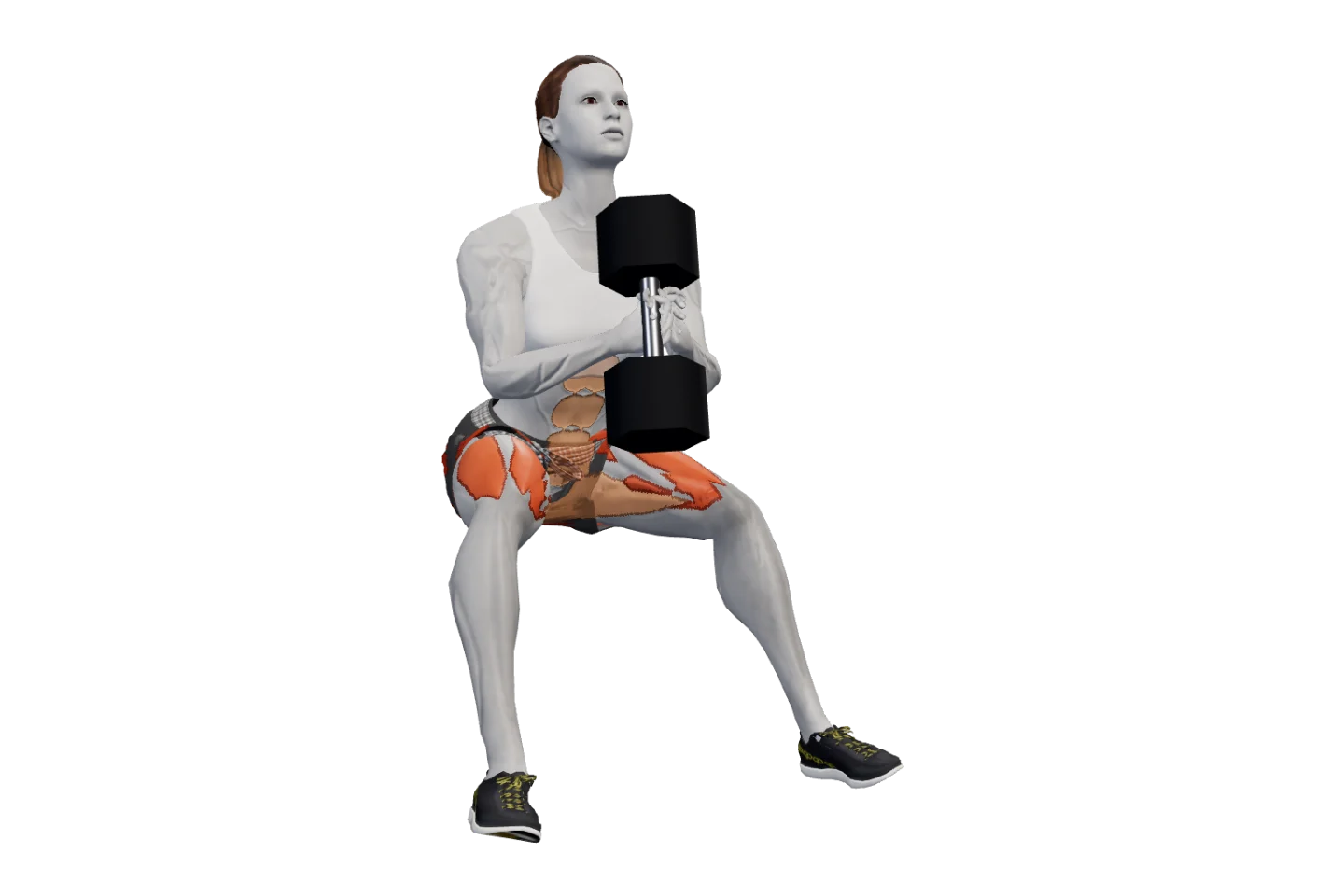
Goblet Squat
Squat holding one dumbbell at the chest.
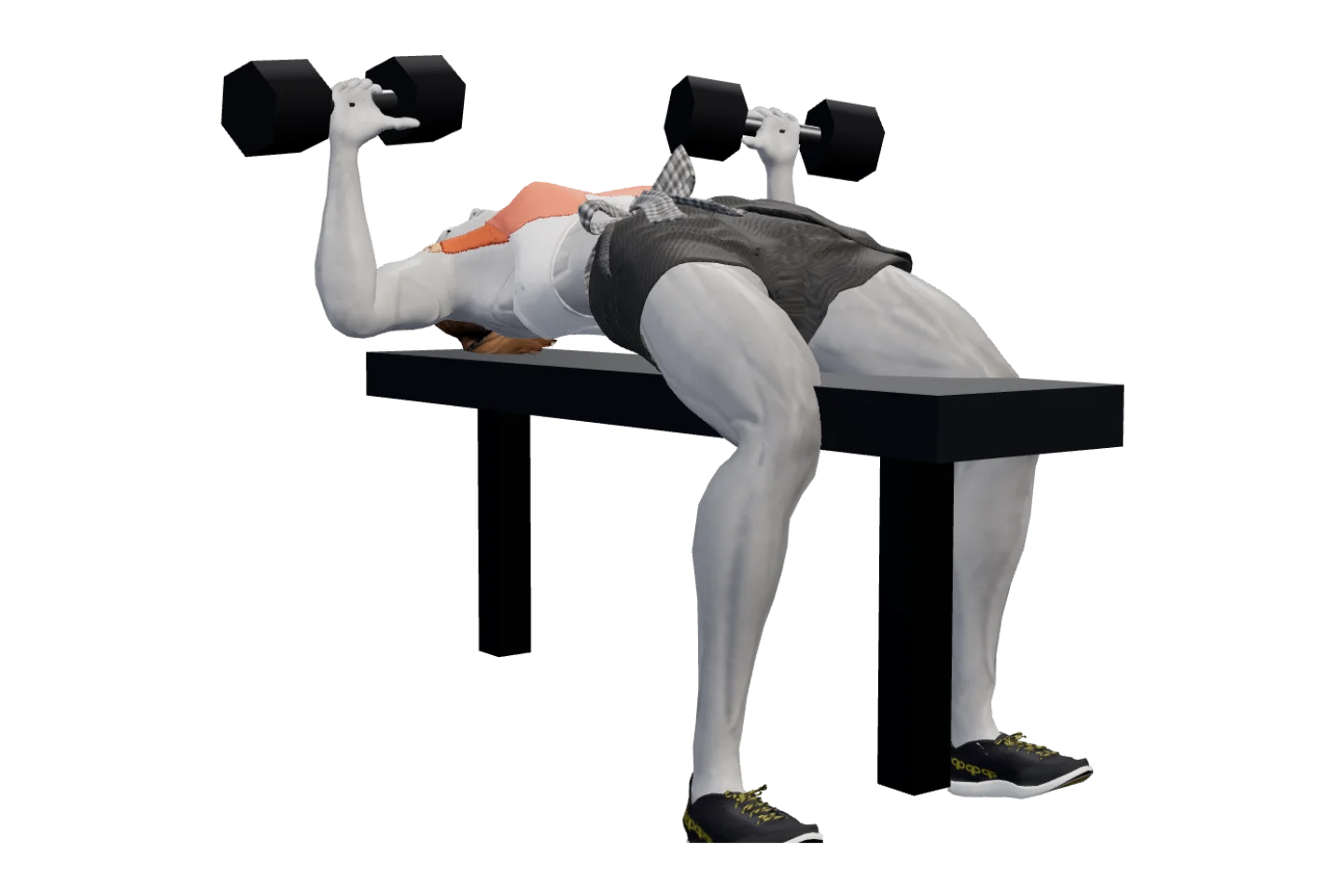
Dumbbell Bench Press
Flat dumbbell press, friendly to shoulders.
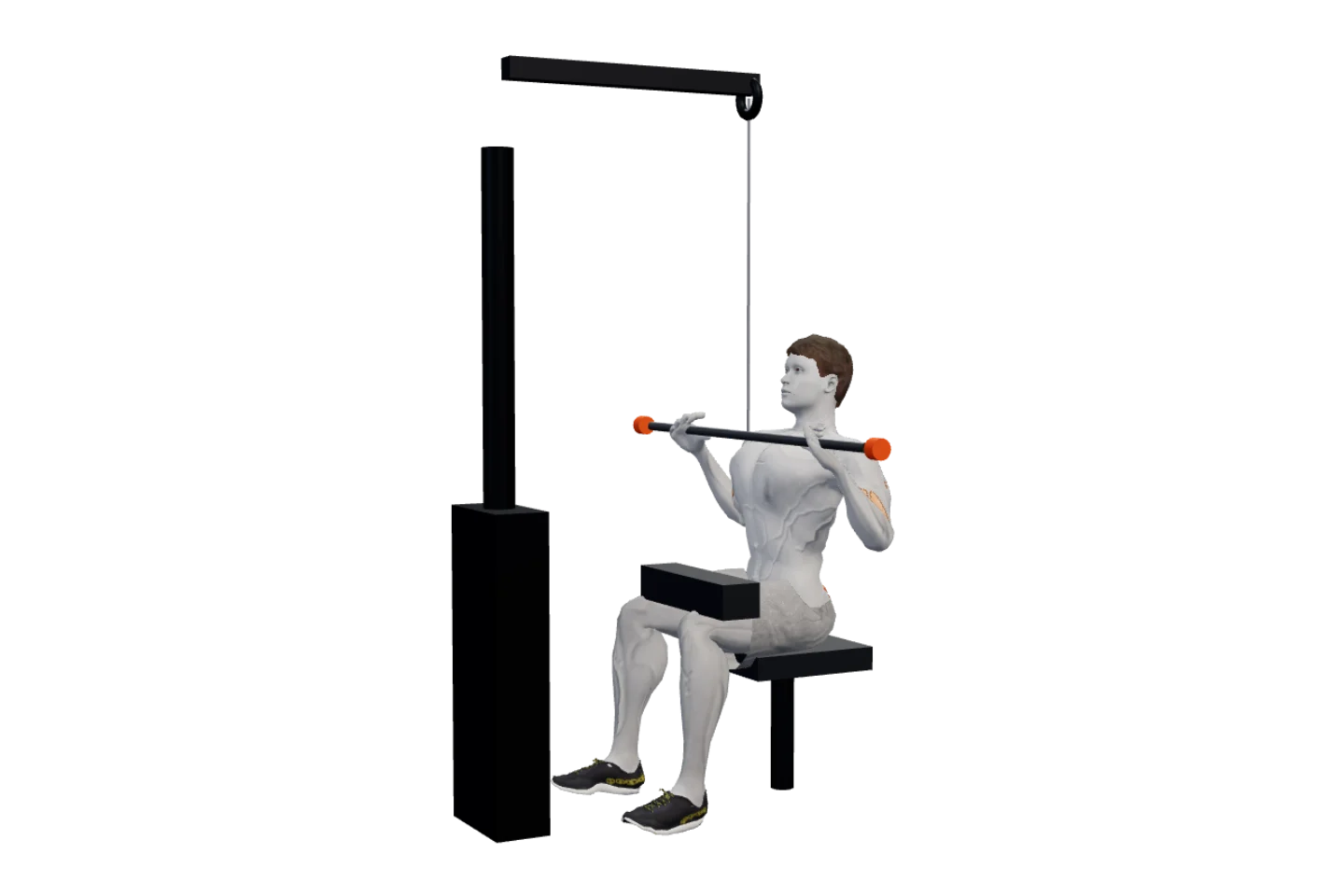
Lat Pulldown
Cable vertical pull; the pull-up you can load precisely.
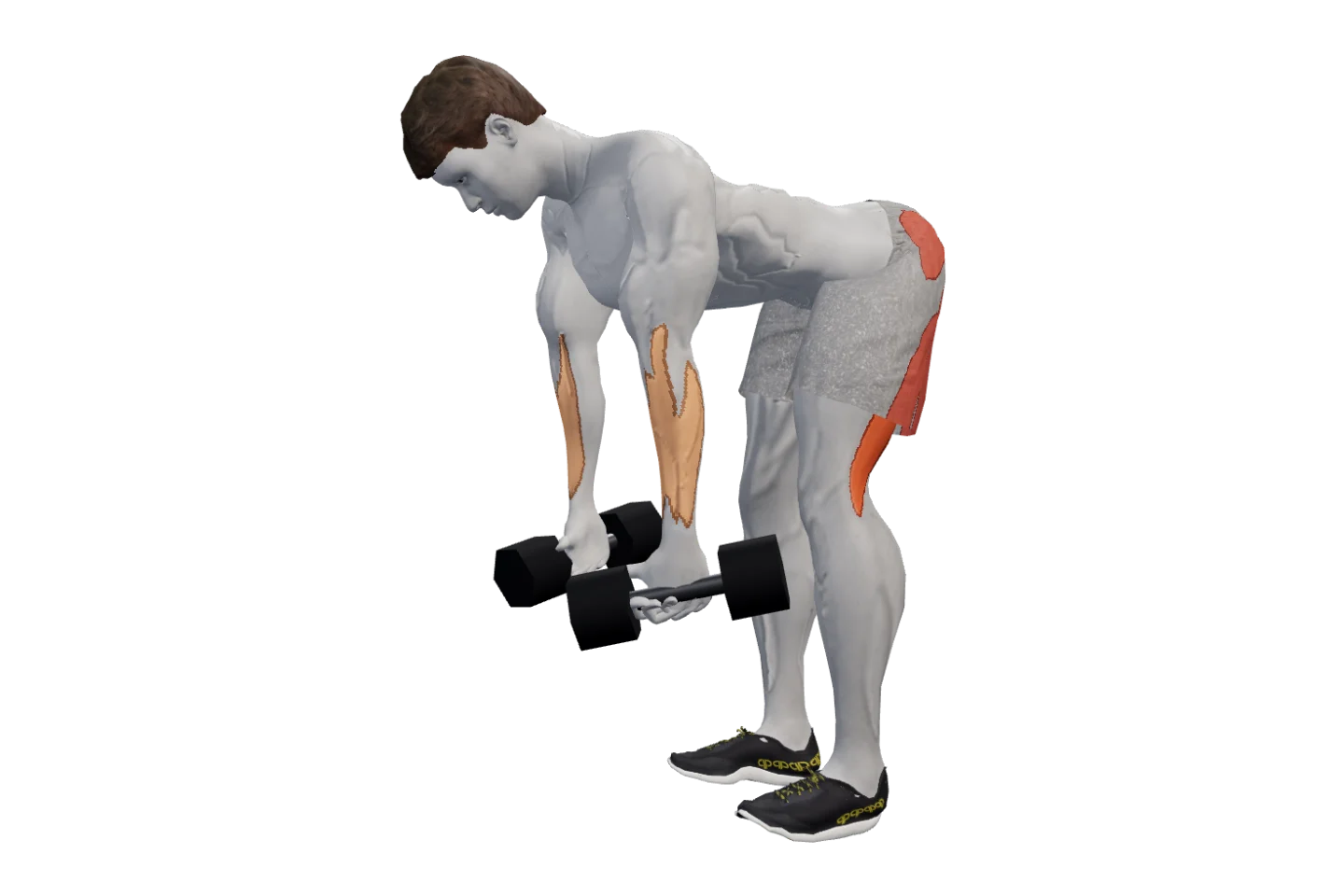
Dumbbell Romanian Deadlift
Hip hinge with dumbbells; easier to learn than the barbell.
Sources
- American College of Sports Medicine (2009) Progression models in resistance training for healthy adults. Med Sci Sports Exerc 41(3):687–708. doi.org/10.1249/MSS.0b013e3181915670
- Schoenfeld BJ, Ogborn D, Krieger JW (2016) Effects of resistance training frequency on measures of muscle hypertrophy: a systematic review and meta-analysis. Sports Med 46(11):1689–1697. doi.org/10.1007/s40279-016-0543-8
- Helms ER et al. (2016) Application of the repetitions in reserve-based rating of perceived exertion scale for resistance training. Strength Cond J 38(4):42–49. doi.org/10.1519/SSC.0000000000000218
- Bull FC et al. (2020) World Health Organization 2020 guidelines on physical activity and sedentary behaviour. Br J Sports Med 54(24):1451–1462. doi.org/10.1136/bjsports-2020-102955