Key takeaways
- Warm up in three steps: general warm-up, mobility, ramp-up sets.
- Ramp-up sets: empty bar ×10, 40% ×5, 60% ×3, 75% ×2, 85% ×1.
- The whole warm-up usually takes 10–15 minutes.
- Save long static stretches for after training, not before heavy sets.
Why warm up at all?
A warm muscle contracts faster and more forcefully, joints move more freely and your nervous system gets time to switch on. In the meta-analysis by Fradkin et al. (2010), warming up improved performance in most of the measures studied and almost never made it worse.
In strength training, the warm-up has three practical jobs:
- Prepare the body: temperature and heart rate go up and ranges of motion open.
- Groove the technique: light sets are practice reps for the day's main lift.
- Check in: you notice early if something is stiff or sore and can adjust the session.
To be honest, there is less direct research on warm-ups preventing injuries in the gym than on warm-ups improving performance. Still, a short, sensible warm-up is cheap insurance, and it makes your working sets better.
The three steps of a warm-up
1. General warm-up (5–7 min)
Start with something light that raises your heart rate: the Rowing Machine, Stationary Bike, Jump Rope or a brisk incline walk. The pace is right when you are slightly out of breath but can still talk. The goal is to get warm, not tired.
2. Mobility and activation (3–5 min)
Pick 2–4 dynamic drills that match the day's session. Do 5–10 slow, controlled reps of each through the full range.
- Lower-body day: World's Greatest Stretch, 90/90 Hip Switch, Knee-to-Wall Ankle Mobility and a light Goblet Squat.
- Upper-body day: Band Pull-Apart, Band Shoulder Pass-Through, Cat-Cow and Foam Roller Thoracic Extension.
If one area is always tight for you, spend a couple of extra minutes there. You do not have to do everything every time.
3. Ramp-up sets
This is the most important part. You perform the day's first main lift with lighter loads, raising the weight and dropping the reps as you approach your working weight. Reps go down so you do not tire yourself before the sets that count. A solid default ladder:
empty bar ×10 → 40% ×5 → 60% ×3 → 75% ×2 → 85% ×1
The percentages are of today's working weight, not your one-rep max.
Worked example: a 100 kg squat
Say your program calls for the Back Squat at 3 × 5 with 100 kg.
| Set | % of working weight | Weight | Reps | Rest |
|---|---|---|---|---|
| 1 | empty bar | 20 kg | 10 | 30–60 s |
| 2 | 40% | 40 kg | 5 | 30–60 s |
| 3 | 60% | 60 kg | 3 | about 60 s |
| 4 | 75% | 75 kg | 2 | 60–90 s |
| 5 | 85% | 85 kg | 1 | 1.5–2 min |
| Working sets | 100% | 100 kg | 3 × 5 | as programmed |
That is only 21 warm-up reps, with the heaviest ones done as singles. It is enough to prime your nervous system without taking anything away from the working sets.
Lighter weights: round and trim
If your working weight on the Bench Press is 60 kg, the percentages give 24, 36, 45 and 51 kg. Round to what you can load on the bar: 25, 35, 45 and 50 kg. If a percentage would fall below the empty bar, skip that step. A beginner working with 30–40 kg often needs only the empty bar and one in-between set.
What about the next exercises?
After the first main lift you are already warm. The second big lift usually needs only 1–2 ramp-up sets, for example 50% ×5 and 75% ×2. For accessory and isolation work, the first working set often doubles as the warm-up as long as you keep 2–3 reps in reserve (see RIR and RPE Explained: How Hard Should a Set Be?).
A ready-made 12-minute lower-body warm-up
- 0–6 min: bike or rower at an easy pace, picking it up slightly in the last minute.
- 6–9 min: 5 reps per side of the world's greatest stretch, 8 per side of knee-to-wall ankle mobility and 8 light goblet squats.
- 9–12 min onwards: squat ramp-up sets as in the table. After the last one, take a normal rest and start your working sets.
On an upper-body day, swap the mobility block for band drills and thoracic extensions, and ramp up on the bench or overhead press. The structure stays the same, so there is nothing to rethink each session.
Short on time?
If you only have 30–40 minutes, shorten the warm-up rather than skipping it. Cut the general part to three minutes and do one mobility drill. Keep the ramp-up sets on heavy main lifts, since those are what prepare you for the working weight; at most, drop the 40% step and go empty bar, 60%, 80%. During a Deload Week: When and How to Deload, when the weights are lighter, two or three ramp-up sets are plenty.
How long should a warm-up take?
Usually 10–15 minutes. Allow a little more if:
- you train early in the morning or in a cold gym
- the day's weights are close to your max
- you have been sitting all day or something feels stiff.
Beyond 20 minutes, a warm-up tends to eat into the energy you need for your working sets. Warm-up sets also do not count towards your weekly training volume, so do not log them as working sets.
Where does static stretching fit?
Static stretching means holding a muscle in a stretched position. Reviews (Behm and Chaouachi 2011; Behm et al. 2016) show that short holds of under 60 seconds per muscle group have only a small effect on strength. Longer holds can temporarily reduce strength and power, especially when they are not followed by a dynamic warm-up.
- Before training: dynamic drills and, if needed, a short hold under 30 seconds for a tight spot.
- After training or on another day: longer static stretches if you want to improve flexibility over time, such as the Couch Stretch.
Common mistakes
- Jumping straight to the working weight: your first working set becomes a warm-up set, and technique suffers.
- Too many warm-up reps: 10 reps at 85% just makes you tired.
- Jumps that are too big: going from the empty bar to 90% does not prepare your nervous system.
- Half an hour of stretching before squats: time and energy go to the wrong place.
If you are just starting out, also read Beginner Gym Program: Your First 8 Weeks. You can learn more about the workout logger or browse ready-made programs.
Questions and answers
How long should I warm up before lifting?
Usually 10–15 minutes: 5–7 minutes of light cardio, 3–5 minutes of mobility, then ramp-up sets for the first main lift of the day.
How many warm-up sets should I do?
For a heavy main lift, about 4–5 ramp-up sets: empty bar ×10, 40% ×5, 60% ×3, 75% ×2 and 85% ×1. With light weights and for later exercises, 1–2 sets are enough.
Is it okay to stretch before lifting?
Short holds under 60 seconds barely affect strength. Move long static stretches to after training or to a separate day.
Do warm-up sets count towards training volume?
No. Warm-up sets are preparation, not a growth stimulus. Count only your working sets.
Exercise library
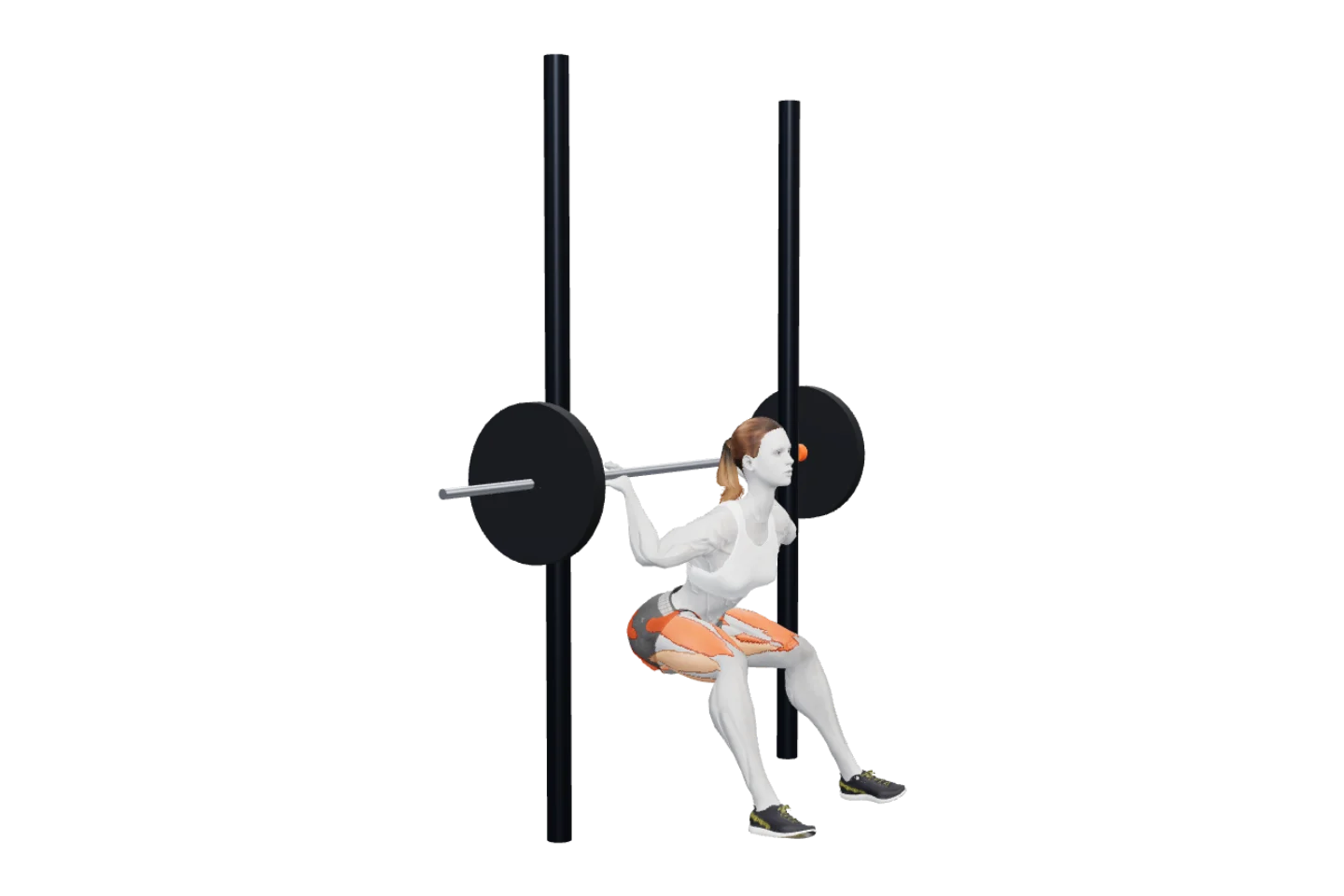
Back Squat
Barbell on the upper back, squat to at least parallel.
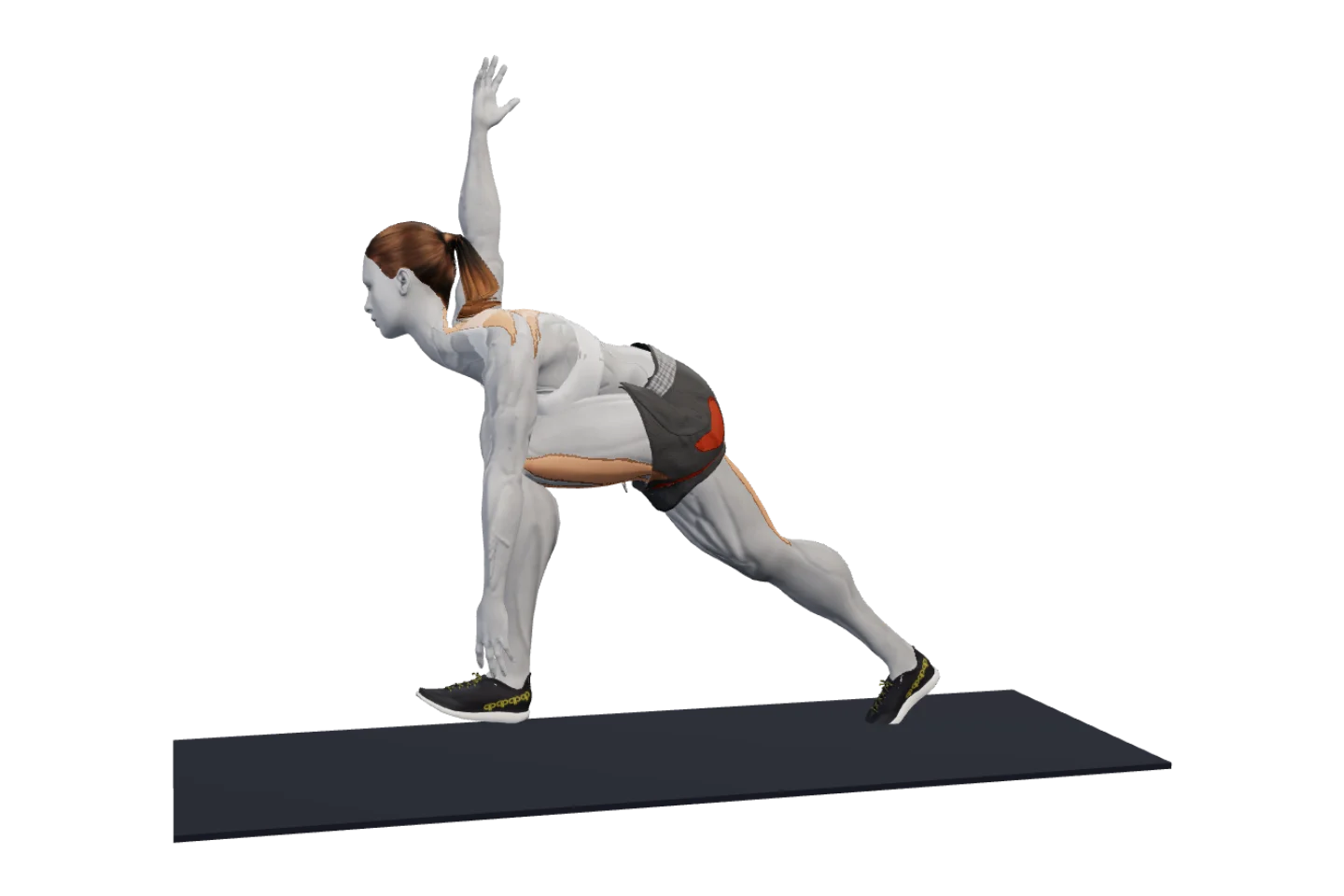
World's Greatest Stretch
Lunge, elbow to instep, rotate the arm to the ceiling.
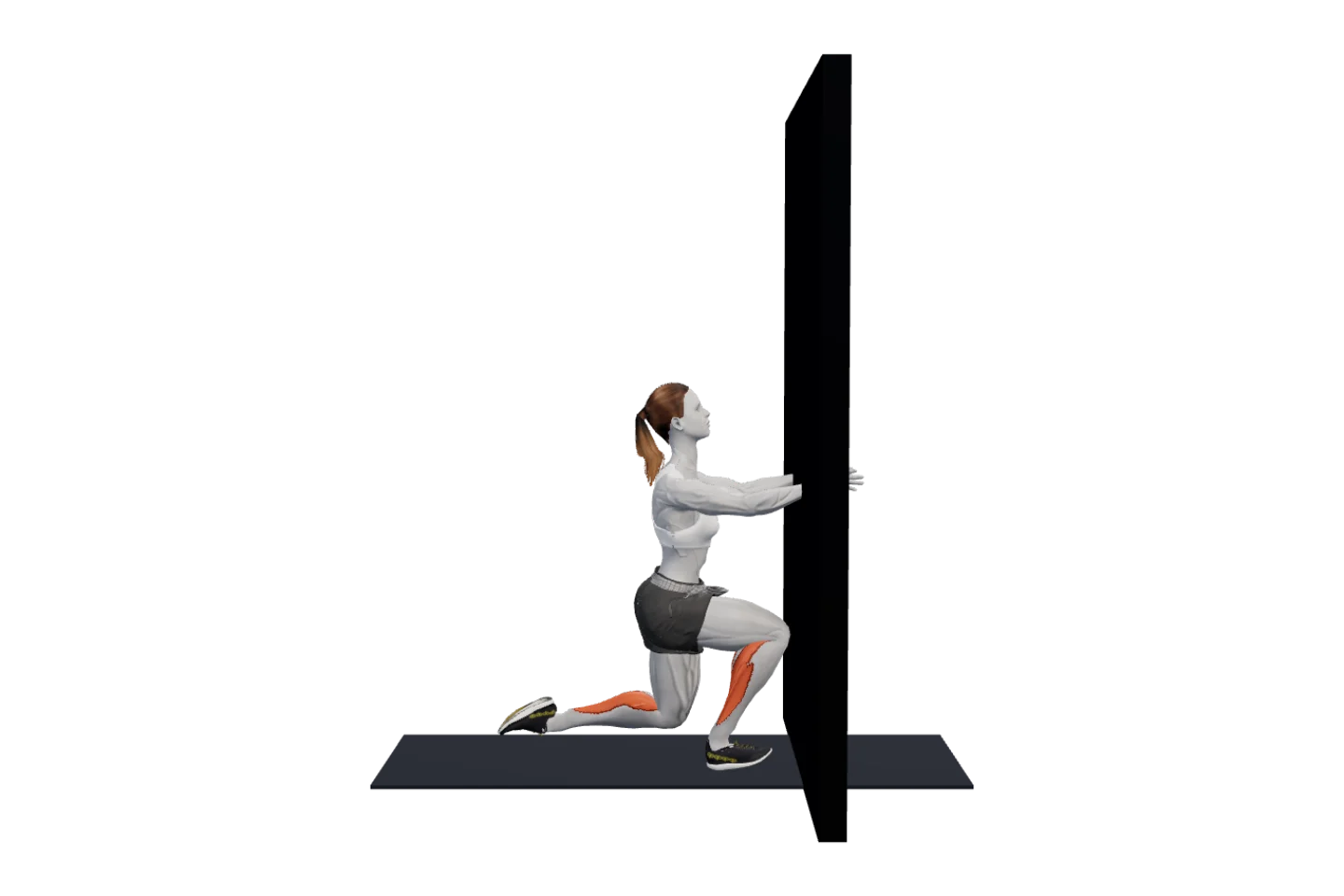
Knee-to-Wall Ankle Mobility
Drive the knee towards a wall with the heel down.
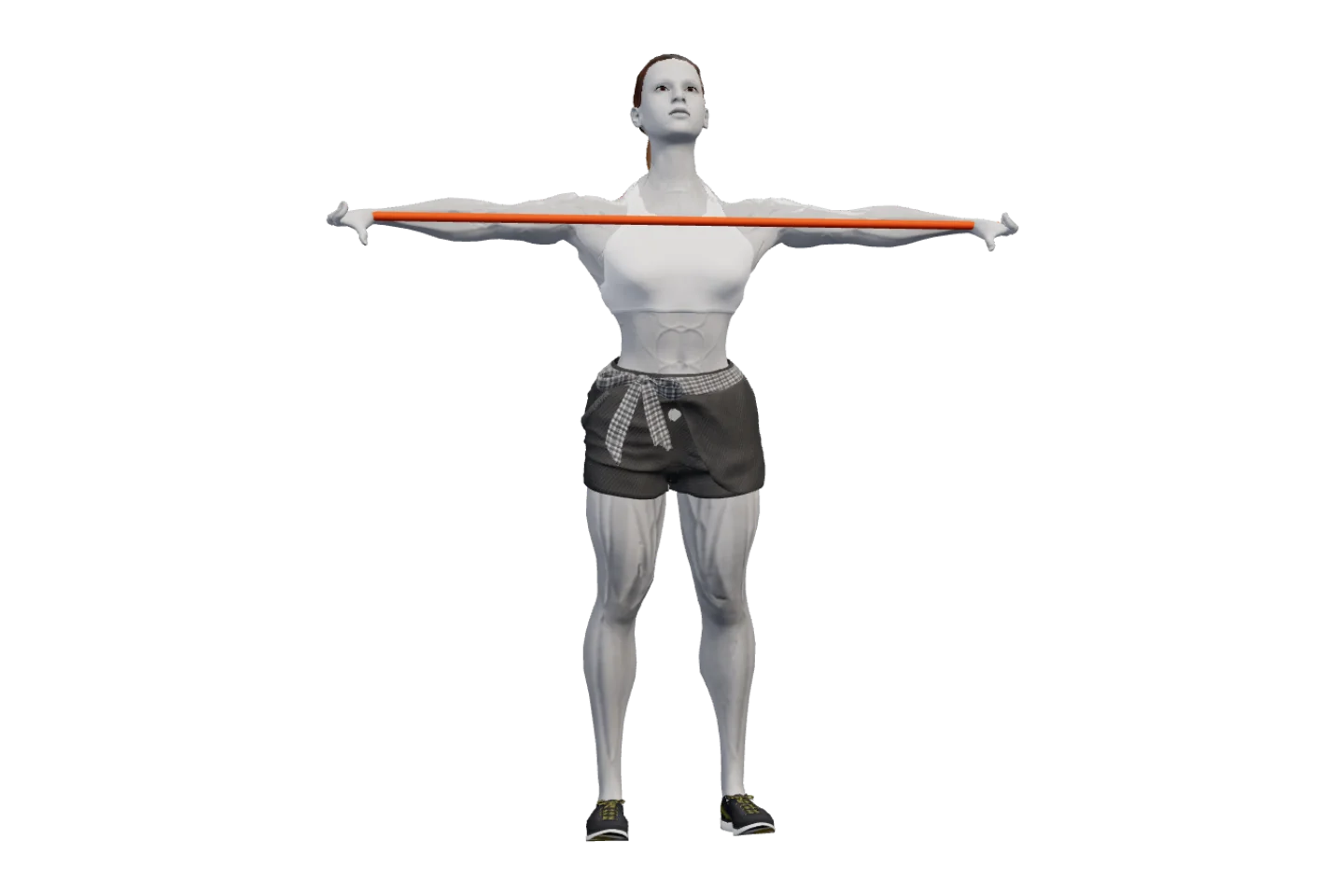
Band Pull-Apart
Pull a band apart at chest height; posture and shoulder health.
Sources
- Fradkin AJ, Zazryn TR, Smoliga JM (2010) Effects of warming-up on physical performance: a systematic review with meta-analysis. J Strength Cond Res 24(1):140–148. doi.org/10.1519/JSC.0b013e3181c643a0
- Behm DG, Chaouachi A (2011) A review of the acute effects of static and dynamic stretching on performance. Eur J Appl Physiol 111(11):2633–2651. doi.org/10.1007/s00421-011-1879-2
- Behm DG et al. (2016) Acute effects of muscle stretching on physical performance, range of motion, and injury incidence in healthy active individuals: a systematic review. Appl Physiol Nutr Metab 41(1):1–11. doi.org/10.1139/apnm-2015-0235